
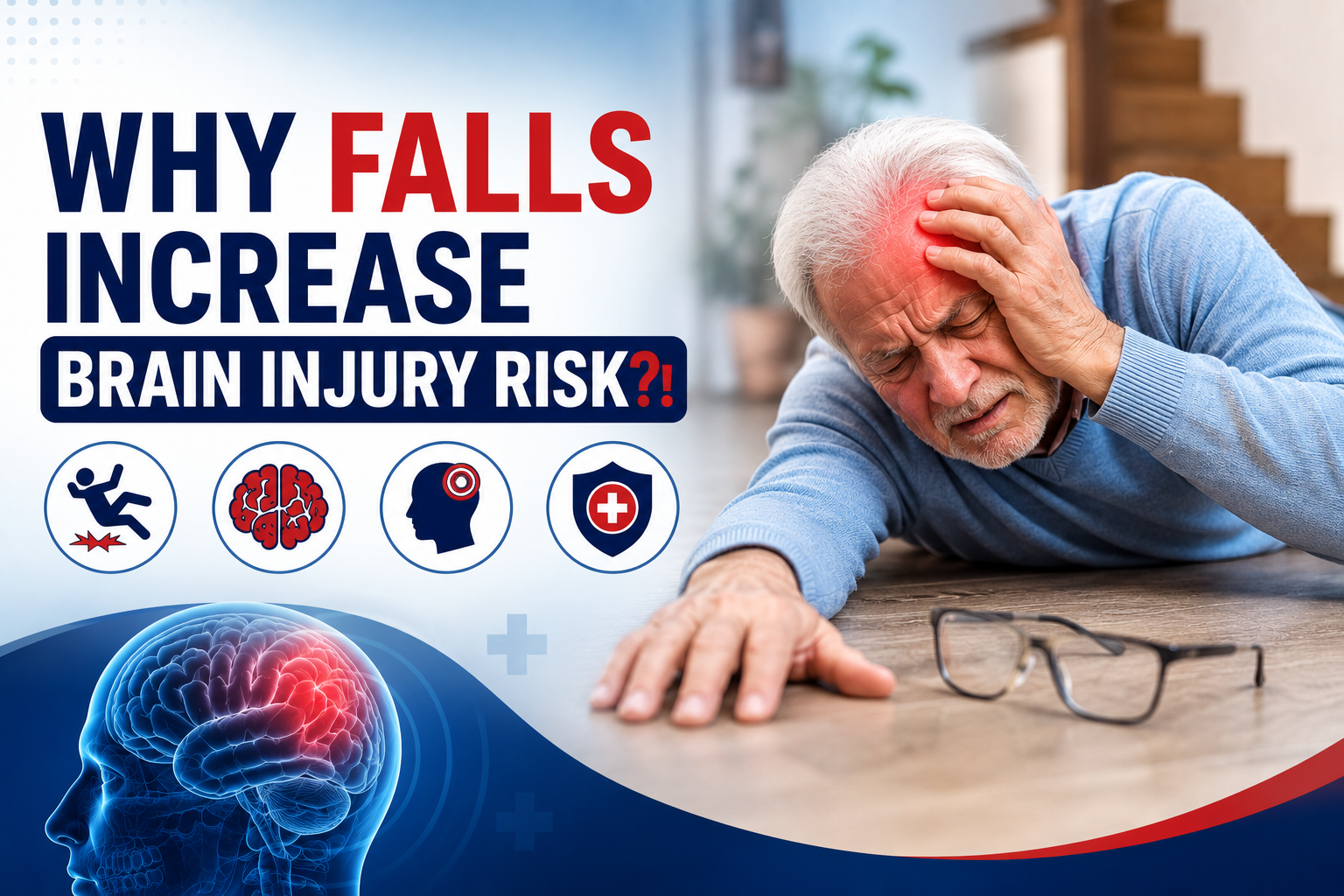
A fall may seem minor at first, especially if there is no obvious bleeding or broken bone. But even a small impact can cause a brain injury and symptoms may not appear right away. That is why every head injury after a fall deserves careful monitoring.
The brain is soft tissue protected by the skull, but a sudden blow can still make it move inside the skull. This movement can bruise the brain, stretch nerve fibers, or cause bleeding. In case of older adults, people taking blood-thinning medicines and anyone with balance problems, the risk is even higher!
Why Falls Are Dangerous:
When a person falls and hits the head, the brain can be injured in two ways. First, the head may strike a hard surface, causing direct trauma. Second, the brain may bounce or twist inside the skull, which can injure tissue even if the outside of the head looks normal.
Falls are especially risky because they are unpredictable.
A person may trip, slip, faint, or lose balance suddenly, giving no time to brace the body. The impact can involve the forehead, side of the head, or the back of the head, and any of these can lead to concussion or more serious injury.
Even if the fall seems “small,” the force may still be enough to cause headache, dizziness, confusion, or memory changes.
In some cases, bleeding inside the skull can develop slowly over hours or days.
That is why monitoring after a fall is so important.
Signs to watch:
➔ After a fall, some symptoms can appear immediately, while others develop later.
➔ Common warning signs include headache, dizziness, nausea, vomiting, blurred vision, and trouble focusing.
➔ A person may seem unusually sleepy, confused, irritable, or slow to answer questions.
➔ Other concerning signs include loss of consciousness, even for a few seconds, memory gaps around the fall, trouble walking, weakness, slurred speech, or seizures.
➔ In children, watch for unusual crying, poor feeding, vomiting, or changes in behavior.
➔ In older adults, even mild confusion or a change from usual behavior can be important.
➔ Symptoms may be subtle at first…….a person might say they are “fine,” but later develop a worsening headache or seem less alert. So any change after a head injury should be taken seriously.
Who is at higher risk?
❖ Older adults are at higher risk because the brain may shrink slightly with age, creating more space inside the skull and making blood vessels more vulnerable to tearing. Balance problems, weak muscles, poor vision, and osteoporosis also increase the chance of falling.
❖ People taking aspirin, clopidogrel, warfarin, or other blood-thinning medicines may bleed more easily after an injury.
❖ Alcohol use can also increase both the chance of falling and the risk of missing early warning signs. ❖ Children, people with epilepsy, and those with fainting episodes may also be at increased risk because falls can happen suddenly.
❖ A past stroke, dementia, or neurological condition may make it harder for someone to report symptoms clearly.
Prevention Tips:
➔ Preventing falls is one of the best ways to reduce brain injury risk.
➔ Keep floors dry, remove loose rugs, improve lighting, and use handrails on stairs.
➔ In bathrooms, grab bars and non-slip mats can make a big difference.
➔ Good footwear is important too. Shoes should fit well and have non-slip soles.
➔ People with balance issues may benefit from using a cane or walker, but only if the device is fitted correctly and used consistently.
➔ Regular eye checks can also help prevent trips and missteps.
➔ Exercise can reduce fall risk by improving strength, coordination, and balance.
➔ Simple routines such as walking, leg strengthening, and balance exercises may be helpful when done safely and regularly. Reviewing medications with a doctor is also wise, because some medicines can cause dizziness, drowsiness, or low blood pressure.
➔ For older adults, it may help to check the home for hazards such as poor lighting, cluttered walkways, and unstable furniture. These small changes often prevent serious injuries.
When To Seek Help?
Medical care should be sought after a head injury if the person loses consciousness, vomits more than once, has a severe headache, seems confused, or cannot remember what happened. Help is also needed if there is weakness, trouble speaking, drowsiness that is hard to wake from, or a seizure.
Even if symptoms seem mild, it is important to monitor closely for the next 24 to 48 hours. Some brain injuries do not become obvious right away, If the person is elderly, on blood thinners, or had a significant hit to the head, a lower threshold for medical evaluation is appropriate.
Call emergency services immediately if the person becomes difficult to wake, has unequal pupils, develops weakness on one side, or shows sudden worsening after initially seeming stable. These can be signs of bleeding in the brain or another serious injury.
Treatment Awareness:
● Treatment depends on the severity of the injury.
● Many mild concussions are managed with rest, symptom monitoring, and gradual return to normal activity. However, complete rest for long periods is usually not recommended; recovery is often better with a careful, step-by-step return to routine as advised by a clinician.
● More serious injuries may require emergency treatment, scans, observation in hospital, or surgery if there is bleeding or pressure on the brain. Pain medicines should be used carefully, especially if there is concern for bleeding. The doctor may also advise stopping certain activities, avoiding alcohol, and not driving until symptoms improve.
● Recovery can take days to weeks for a mild injury, and longer for more serious cases. Follow-up matters because some people develop lasting symptoms such as headaches, dizziness, poor concentration, sleep problems, or mood changes. If symptoms do not improve as expected, further evaluation is needed.
GEWO Health Message:
Get help early, Explain symptoms clearly, Watch closely, and Optimize recovery.
This means taking every head injury seriously, even when it seems minor at first.
A fall may end with just a bruise, but it may also lead to a concussion or bleeding that is not visible from the outside. Careful monitoring, timely medical attention, and prevention strategies can reduce the chance of long-term harm.
Medical Disclaimer:
This article is for general education only and does not replace medical advice, diagnosis, or treatment. Any head injury can be serious, especially in older adults, children, or people taking blood-thinning medicines.