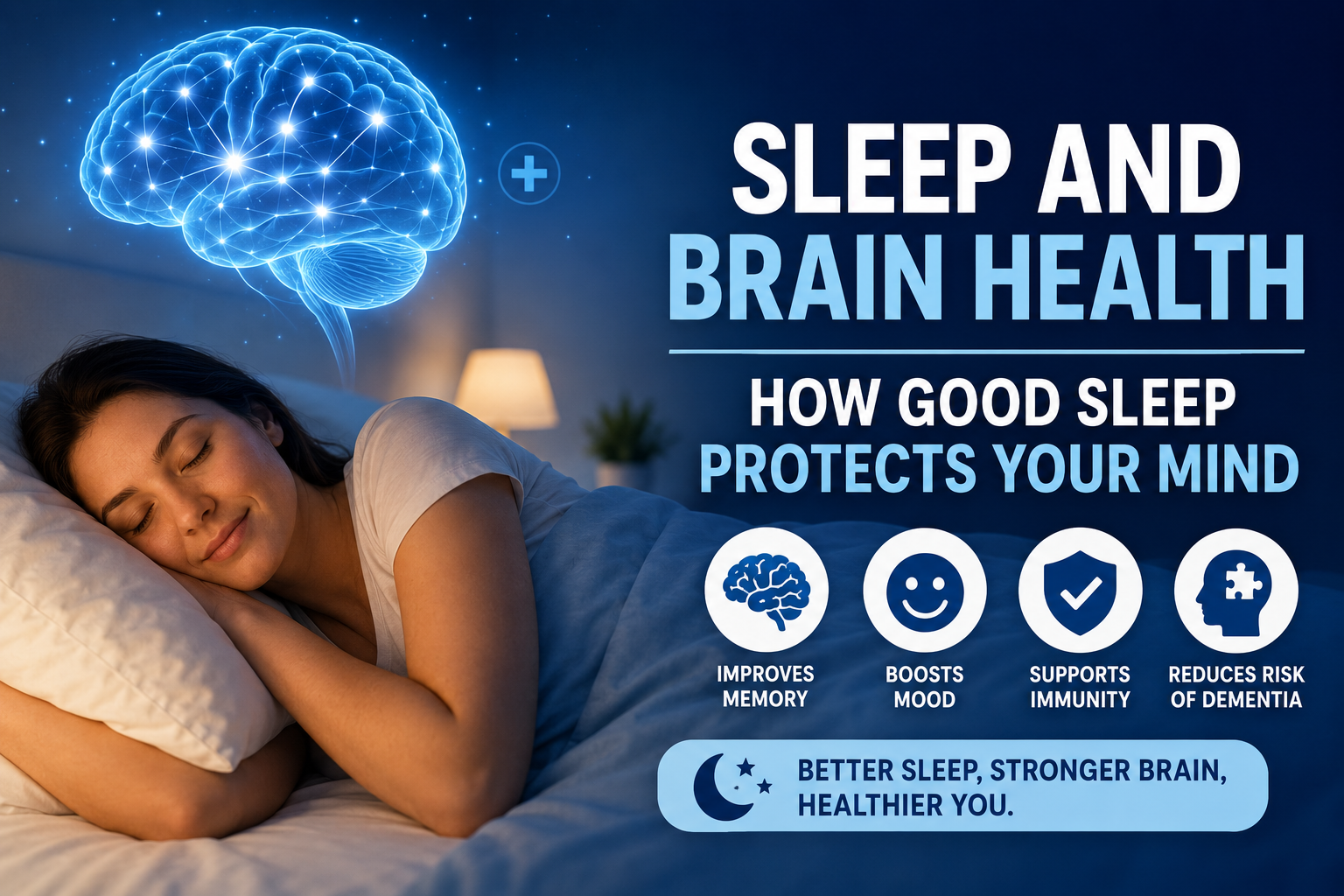
Sleep is not just rest - it’s an active, essential process your brain uses to repair, organise and strengthen itself.
Good sleep improves memory, mood, decision-making and immune function.
Poor or insufficient sleep raises the risk of accidents, worsens chronic conditions and over time contributes to cognitive decline and dementia. This article explains common sleep-related symptoms, why sleep matters for brain health, what increases risk, practical prevention tips, when to see a doctor, available treatments, and a short health message from GEWO.
How sleep problems affect you:
● Difficulty falling asleep (takes more than 30 minutes to nod off).
● Frequent night awakenings or waking too early and being unable to return to sleep.
● Excessive daytime sleepiness (dozing off during meetings, while driving, or needing naps).
● Morning headaches or a heavy, “foggy” feeling after sleep.
● Poor concentration, memory lapses, slowed thinking, or mood changes (irritability, anxiety, low
mood).
● Loud snoring, gasping, or choking during sleep (possible signs of sleep-disordered breathing).
● Uncomfortable leg sensations or frequent leg movements at night (restless legs syndrome).
What commonly causes poor sleep and harms the brain:
● Sleep deprivation and irregular sleep schedules: Chronic short sleep (under 7 hours for most
adults) reduces the brain’s ability to clear waste proteins and weakens memory consolidation.
● Sleep-disordered breathing (obstructive sleep apnea): Repeated pauses in breathing cause low
oxygen and fragmented sleep, increasing stroke, high blood pressure, and cognitive decline risk.
● Insomnia (difficulty falling or staying asleep): Often linked to stress, mood disorders, or medical
conditions. Chronic insomnia is associated with worse attention, memory, and higher risk of
mood problems.
● Circadian rhythm disruption: Shift work, jet lag, or irregular bedtimes disturb the internal clock
that times sleep and many brain processes.
● Medical conditions: Chronic pain, Parkinson’s disease, depression, anxiety, thyroid disorders, and
neurological illnesses can interfere with sleep.
● Medications and substances: Some medicines, caffeine, nicotine, alcohol, and recreational drugs
disrupt sleep architecture. Alcohol might help you fall asleep but fragments restorative sleep
later.
● Age: Sleep patterns change with age (older adults may sleep lighter and for shorter periods) and
are more vulnerable to sleep disorders.
● Lifestyle factors: Poor sleep environments (light, noise, uncomfortable bed), lack of daytime
activity, and excessive screen time before bed.
● Genetic and family factors: There is some hereditary predisposition to conditions like restless
legs and certain sleep disorders.
Practical steps you can start today:
Aim for consistent sleep timing: Go to bed and wake up at the same time daily, even on weekends.
● Target adequate duration: Most adults need 7–9 hours per night. Adjust with your doctor if you
have special medical needs.
● Create a sleep-friendly bedroom: Keep it cool, dark, quiet, and comfortable. Use blackout
curtains, earplugs, or white noise if needed.
● Establish a relaxing pre-sleep routine: 30–60 minutes of calming activities — reading, gentle
stretching, warm shower, or breathing exercises.
● Limit screens and bright light before bed: Stop using phones, tablets, and computers at least 60
minutes before sleep or use blue-light filters.
● Watch caffeine and alcohol: Avoid caffeine after mid-afternoon and limit alcohol close to
bedtime.
● Be active during the day: Regular physical activity improves sleep quality. Finish vigorous exercise
at least a few hours before bed.
● Nap smartly: Short naps (15–30 minutes) can restore alertness; avoid long or late afternoon naps
that interfere with night sleep.
● Manage stress and mood: Mindfulness, relaxation techniques, and counselling help reduce
insomnia linked to anxiety or depression.
● Review medications: Ask your doctor if any prescribed drugs may affect sleep; timing or
alternatives may help.
When to Consult a Doctor?
See a healthcare professional if you experience any of the following:
● Persistent sleep problems lasting more than 3 months despite lifestyle changes.
● Excessive daytime sleepiness that interferes with work, driving, or daily tasks.
● Loud snoring with witnessed breathing pauses, gasping, or choking (possible sleep apnea).
● New or worsening memory loss, confusion, or frequent falls.
● Hallucinations, sleep paralysis, or sudden muscle weakness when falling asleep or waking (REM
sleep behaviour disorders or narcolepsy signs).
● Symptoms of restless legs that prevent falling asleep.
● Mood problems or suicidal thoughts alongside sleep disturbance.
Treatment Awareness: Sleep hygiene and behavioural treatments: First-line for many problems is sleep hygiene plus cognitive behavioural therapy for insomnia (CBT-I). CBT-I addresses thoughts and behaviours that maintain poor sleep and is effective long-term.
● Positive airway pressure (PAP) therapy: For obstructive sleep apnea, continuous positive airway
pressure (CPAP) or auto-adjusting devices improve oxygenation, daytime sleepiness, blood
pressure, and may lower long-term cognitive risk.
● Oral appliances and surgery: Dental devices that advance the jaw can help mild-moderate sleep
apnea. Surgery is reserved for specific structural problems.
● Medications: Short-term use of sleep medicines can be helpful, but they have side effects and
are usually not the long-term answer. Treat underlying anxiety, depression, or medical causes
when present.
● Treat underlying conditions: Managing pain, thyroid disease, mood disorders, or neurological
illness often improves sleep.
● Specialist referrals: Neurologists, sleep medicine specialists, psychiatrists, or ENT surgeons may
be involved depending on diagnosis.
● Monitoring and follow-up: Sleep studies (polysomnography or home sleep tests) help diagnose
apnea and other disorders; treatment is tailored and followed up for effect and side effects.
GEWO Health Message:
Healthy sleep is central to brain health across the lifespan.
Small changes- consistent timing, a calming bedtime routine, limiting caffeine and screens, and seeking help for snoring or persistent sleepiness can protect memory, mood and daily function.
Prioritise sleep as a key part of your overall preventive health plan.
Medical Disclaimer: This article provides general information about sleep and brain health and is not a substitute for professional medical advice, diagnosis, or treatment.