Introduction:
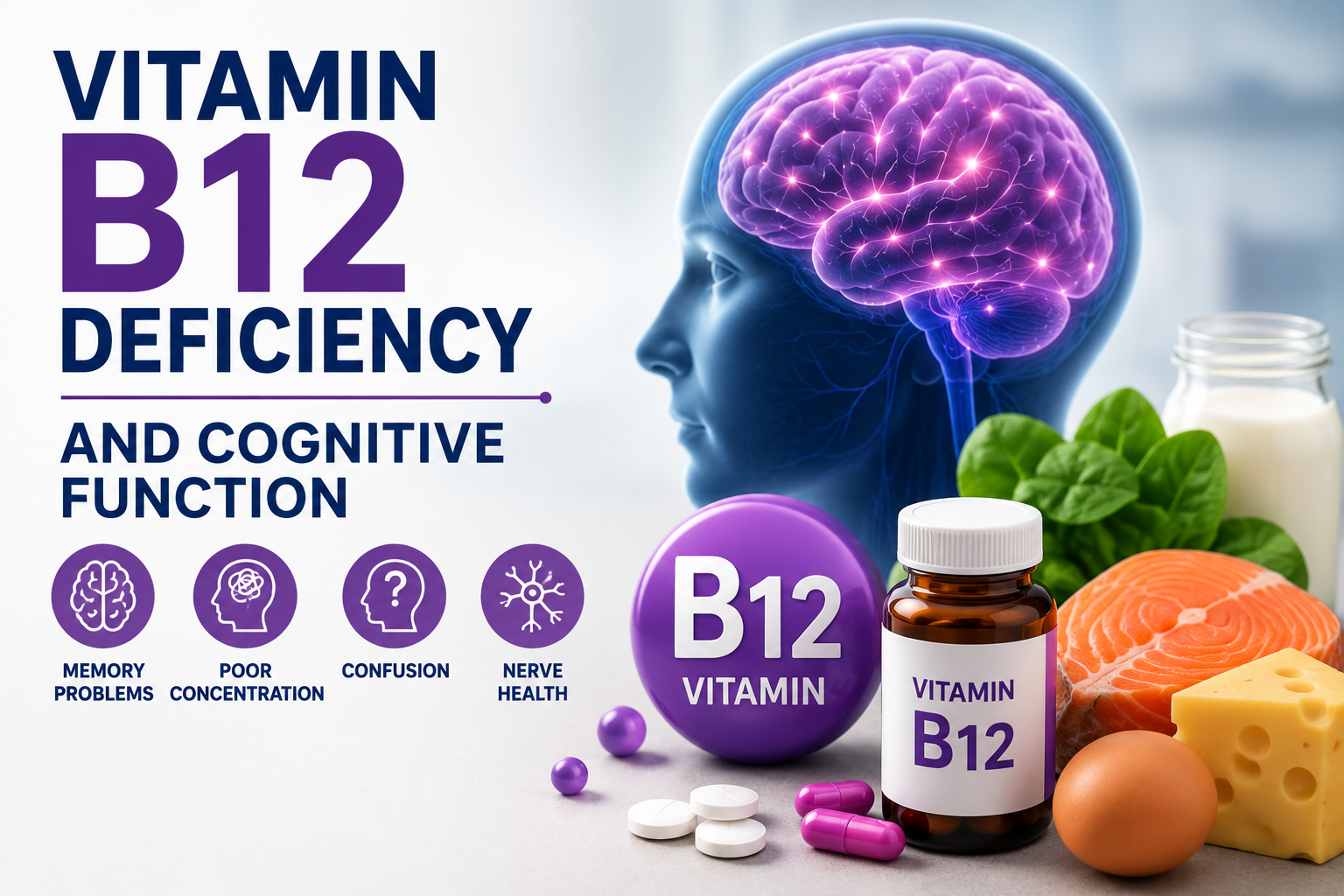
Vitamin B12 is an essential nutrient that helps the body make red blood cells, maintain nerve health and support normal brain function. When B12 levels are low for a long time, people may develop symptoms such as forgetfulness, trouble concentrating, low mood or even confusion. Research shows that vitamin B12 deficiency can be linked to cognitive impairment and in some cases, cognitive symptoms have shown improvement after treatment if the deficiency is the cause. Awareness of this is important because B12-related cognitive problems can be mistaken for normal aging, stress, depression or early dementia. Well, the good news is that vitamin B12 deficiency is often treatable and early recognition matters.
Symptoms:
Vitamin B12 deficiency can affect the brain and nervous system as well as the blood.
● Cognitive symptoms may include memory problems, poor concentration, mental slowing, confusion or difficulty finding words.
● Some people also notice fatigue, irritability, low mood, tingling or numbness in the hands and feet, balance problems, or weakness.
● Symptoms may develop slowly, which is why they are sometimes overlooked.
● Older adults are especially vulnerable because B12 deficiency may look like “just aging,” even when there is a treatable medical cause.
Causes and risk factors:
Vitamin B12 is found naturally in animal-based foods such as meat, dairy, eggs, and fish, so people with low intake or poor absorption can become deficient.
● Common causes include vegetarian or vegan diets without reliable supplementation, stomach or bowel conditions that reduce absorption and lack of intrinsic factor, which is needed to absorb B12 properly.
● Some medicines and health conditions also raise the risk.
● Metformin use has been linked with lower B12 levels and people who have had stomach or small bowel surgery may be at higher risk because absorption is affected.
● Older age can also reduce absorption, which increases the chance of deficiency.
Prevention tips:
➔ A balanced diet can help prevent deficiency, especially foods rich in B12 such as milk, yogurt, eggs, fish, poultry, and meat.
➔ People who avoid animal products may need fortified foods or a supplement, since diet alone may not provide enough B12.
➔ Other practical steps include regular health checkups if you are older, follow a vegan diet, have digestive disease or take long-term metformin.
➔ If you already have a known risk factor, ask your doctor whether periodic B12 testing is appropriate.
When to consult a doctor?
See a doctor if you have persistent memory problems, confusion, numbness, tingling, balance issues, unexplained fatigue or a low mood that does not improve. Medical advice is especially important if symptoms are affecting daily life or getting worse over time. You should also seek evaluation if you belong to a higher-risk group, such as older adults, people with vegetarian or vegan diets, those taking metformin, or anyone with a history of stomach or intestinal surgery. Blood tests can help identify deficiency and distinguish it from other causes of cognitive symptoms.
Treatment awareness:
Treatment depends on the cause and severity of deficiency ! Doctors may recommend oral B12 tablets or B12 injections and both can correct low levels (injections are often used when absorption is poor or symptoms are significant). In people with true deficiency, treatment can improve blood abnormalities and may improve cognitive symptoms as well. It is important not to self-treat severe symptoms without medical assessment, because cognitive changes can also have other causes that need attention. If deficiency is confirmed, treatment may be long term, especially when the underlying cause is ongoing.
GEWO Health Message:
At GEWO Health, we believe small deficiencies can have a big impact on brain health. If you notice memory changes, tingling, or unusual fatigue, do not ignore them-simple testing and timely treatment may make a meaningful difference.
Medical disclaimer:
This article is for general education only and does not replace medical advice, diagnosis, or treatment. If you have symptoms of vitamin B12 deficiency or concerns about memory and thinking, please consult a qualified healthcare professional for personalized evaluation.