Introduction:
When we think about the natural signs of aging, wrinkles, gray hair, and a slight decline in physical speed often come to mind. We also tend to view hearing loss and memory problems as independent, separate consequences of growing older.
For example, if a grandfather struggles to follow a conversation at Thanksgiving or a grandmother
frequently forgets where she left her glasses, we often assume these are distinct aspects of the aging
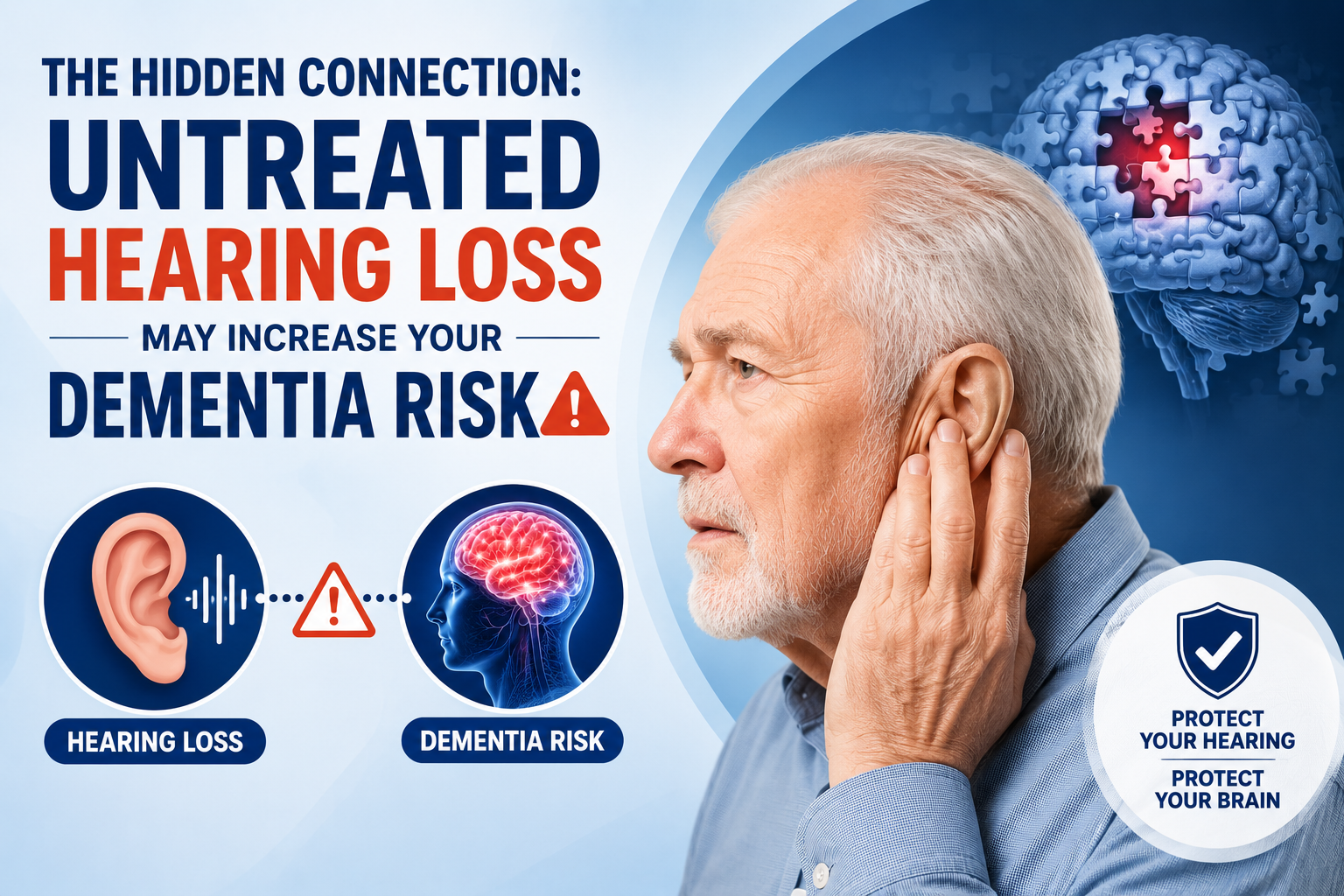
process. However, medical research over the last decade has revealed a profound connection between these two conditions. Untreated hearing loss is not just an inconvenience, it is now recognised as one of the most significant modifiable risk factors for developing dementia.
Dementia is an umbrella term for a decline in cognitive abilities severe enough to interfere with daily life, with Alzheimer's disease being the most common form.
Hearing loss, on the other hand, affects millions of older adults worldwide. It often develops so gradually that individuals adapt to it without realising how much hearing clarity they have lost.
By understanding the link between hearing loss and dementia, we unlock a powerful opportunity to
protect brain health, preserve memory, and maintain a high quality of life well into our later years.
Symptoms:
Common Signs of Hearing Loss:
● The "Mumble" Illusion: Constantly feeling like people around you are murmuring or not
speaking clearly, rather than realizing your own hearing has diminished.
● Social Withdrawal: Choosing to stay home or avoiding dinner parties, restaurants, and family
gatherings because the background noise makes it exhausting to follow conversations.
● Frequent Clarification: Asking others to repeat themselves, say things differently, or speak
louder.
● Volume Escalation: Needing to turn up the television or radio to a volume that others find
uncomfortably loud.
● Fatigue and Strain: Feeling physically or mentally drained after spending time listening to
others speak.
Early Signs of Cognitive Decline & Dementia:
● Memory Loss Disrupting Daily Life: Forgetting recently learned information, important
dates, or asking for the same details repeatedly.
● Confusion with Time or Place: Losing track of dates, seasons, and the passage of time, or
forgetting how you arrived at a specific location.
● Difficulty with Familiar Tasks: Struggling to cook a well-known recipe, navigate to a familiar
grocery store, or manage a household budget.
● Changes in Mood and Personality: Becoming easily upset, anxious, suspicious, fearful, or
depressed, especially when outside of one's comfort zone.
Causes and Risk Factors:
How exactly does a problem located in the ears impact the intricate networks of the brain?
Researchers have identified three primary mechanisms that explain why untreated hearing loss
elevates dementia risk:
1. Cognitive Overload (Brain Strain):
When you have hearing loss, your ears fail to send clear sound signals to your brain. To
compensate, your brain has to work incredibly hard just to process and decode words. This
diverts vital cognitive energy away from other essential brain functions, such as memory
encoding, critical thinking, and problem-solving. Essentially, the brain becomes so
exhausted from trying to hear that it lacks the resources to remember.
2. Brain Atrophy (Use It or Lose It):
The parts of the brain responsible for hearing and speech translation require regular stimulation
to stay healthy. When hearing loss leaves these regions starved of sound input for years, the
brain cells begin to shrink and degrade. This structural atrophy can spread, negatively impacting
neighboring brain regions tied to memory and cognitive stability.
3. Social Isolation:
Human beings are inherently social creatures, and our brains thrive on interaction. Because
struggling to hear makes conversations frustrating, many individuals with hearing impairment
gradually isolate themselves. Social isolation and loneliness are well-documented, independent
risk factors for depression and dementia, as they deprive the brain of complex cognitive
exercises like listening, interpreting, and responding.
Prevention Tips:
➢ The encouraging news hidden within this research is that hearing loss is a modifiable risk factor.
This means taking proactive care of your auditory health can directly contribute to keeping your
mind sharp.
Here are practical ways to protect yourself:
❖ Protect Against Loud Noises: Limit your exposure to prolonged loud sounds. When using
lawnmowers, power tools, or attending concerts, always wear high-quality earplugs or
protective earmuffs.
❖ Keep Volumes Moderate: When listening to music, podcasts, or television through headphones
or earbuds, follow the 60/60 rule: keep the volume below 60% and limit use to 60 minutes at a
time.
❖ Adopt a Brain-Healthy Diet: Nutritional choices that protect your cardiovascular health also
support your ears and brain. Diets rich in antioxidants, omega-3 fatty acids, and leafy green
vegetables keep the blood vessels serving your inner ears and brain healthy.
❖ Schedule Routine Screenings: Just as you get your eyes checked or your blood pressure
monitored annually, add an audiogram (hearing test) to your regular health checkups once you
reach the age of 50.
When to Consult a Doctor?
You should consult a healthcare professional- such as your primary care physician, an
audiologist, or an Otolaryngologist (Ear, Nose, and Throat specialist).
The moment you notice changes in your hearing or memory.
Do not wait for the symptoms to severely impact your lifestyle. If you frequently find yourself guessing what people said, nodding along without fully understanding, or experiencing a persistent ringing in your ears (tinnitus), it is time to seek an evaluation.
Treatment Awareness: For decades, hearing aids carried an unfortunate social stigma, often viewed as clunky, unsightly markers of old age. Today’s hearing technologies are a marvel of modern engineering.
Contemporary hearing aids are incredibly discreet, virtually invisible, and equipped with advanced
artificial intelligence that automatically filters out background noise while enhancing human speech.
Treating hearing loss does more than just make things louder.It restores the clear streams of
auditory information your brain relies on to stay active and fit.
Emerging clinical studies show that when older adults adopt hearing aids to treat their hearing
impairment, the accelerated rate of cognitive decline is significantly slowed, and in some cases, memory performance stabilizes.
Always remember: Seeking treatment is not a sign of weakness, it is an active investment in your
long-term mental clarity.
GEWO Health Message:
At GEWO Health, we believe that healthy aging is built on proactive, comprehensive self- care. Your senses are the pathways through which your brain interacts with the world, absorbs joy and maintains vital connections with loved ones.
Protecting your hearing is a cornerstone of protecting your mind.
We encourage you to advocate for your wellness: book a hearing test today, speak openly with your physician, and embrace the tools that keep your world vibrant, clear and fully connected.
Medical Disclaimer:
The information contained in this article is for educational and informational purposes only and is not intended as medical advice.