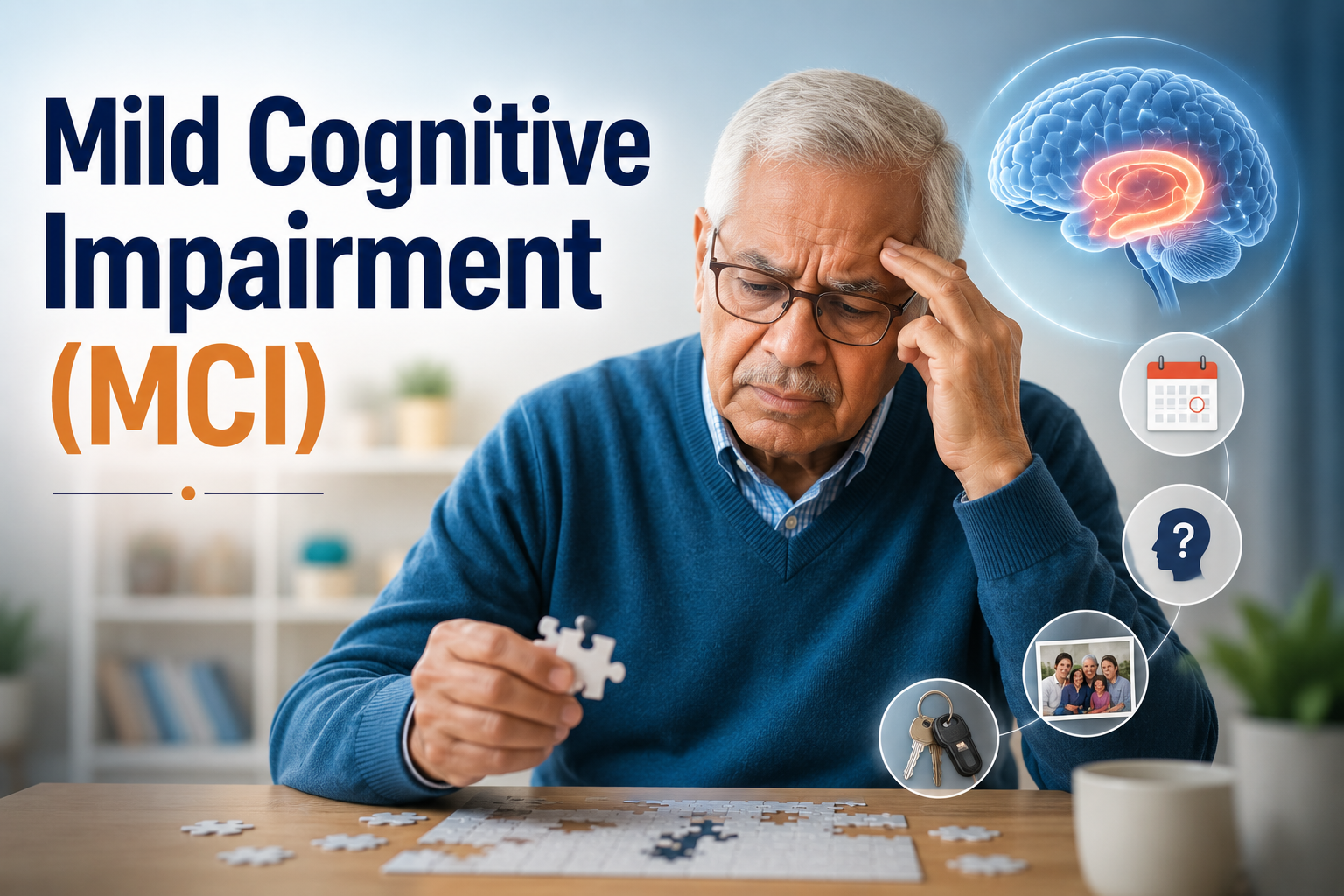
What is Mild Cognitive Impairment (MCI)?
Mild Cognitive Impairment (MCI) is a condition where a person has noticeable problems with memory,
thinking or attention, but these changes are not severe enough to significantly affect daily life.
It is considered an intermediate stage between normal ageing and dementia.
People with MCI:
● Can still manage most daily activities independently.
● May notice they are more forgetful or slower in thinking.
● Are often aware that their memory is not as good as before.
Importantly, MCI is not dementia, but it can increase the risk of developing dementia in the future.
How Common is MCI?
● Around 10-20% of people above 65 years may have MCI.
● It becomes more common with increasing age.
● Many cases are not diagnosed early, as symptoms can be mild.
● Some people remain stable, while others may improve or progress to dementia.
What Happens in the Brain?
In MCI, there are early changes in brain function, but not enough damage to cause full dementia.
Possible changes include:
● Mild loss of brain cells in memory-related areas (especially the hippocampus).
● Reduced communication between brain networks.
● Early buildup of abnormal proteins in some cases (similar to Alzheimer's disease).
MCI can be:
● Amnestic MCI → mainly affects memory.
● Non-amnestic MCI → affects attention, language or decision-making.
Signs and Symptoms:
Early signs you might notice:
Area What Happens
Memory Forgetting recent conversations, events or
appointments.
Thinking Taking longer to plan or solve problems.
Attention Easily distracted or difficulty focusing.
Language Struggling to find the right words occasionally.
Decision-making Slight difficulty making complex decisions.
Orientation Rare mild confusion about dates or time.
Normal age-related memory changes include occasionally forgetting names but remembering them later.
MCI involves more frequent forgetfulness that others around you also notice.
What is NOT usually affected in MCI:
● Basic daily activities like cooking, dressing and hygiene.
● Independent living and routine tasks.
Mood and Behaviour Changes:
Some people with MCI may also experience:
● Anxiety about memory problems.
● Low confidence or frustration.
● Mild depression or worry about future dementia.
● Social withdrawal in some cases.
Risk Factors:
Things you cannot change:
● Age (risk increases after 60–65 years).
● Family history of dementia.
● Genetics (some genes like APOE-e4).
Things you CAN change:
● High blood pressure.
● Diabetes.
● High cholesterol.
● Smoking.
● Obesity.
● Lack of physical activity.
● Poor sleep.
● Social isolation.
● Depression and chronic stress.
● Low mental stimulation.
Many of these factors also overlap with dementia risk.
Prevention Tips:
MCI cannot always be prevented, but brain health can be actively supported:
● Stay physically active (walking, yoga, swimming).
● Eat a balanced diet (fruits, vegetables, nuts, fish, whole grains, a Mediterranean-style diet is
often recommended).
● Control blood pressure, blood sugar, and cholesterol.
● Keep the brain active (reading, puzzles, learning new skills).
● Stay socially connected.
● Sleep well (7–8 hours per night).
● Manage stress through relaxation techniques.
● Avoid smoking and limit alcohol.
When to See a Doctor?
You should seek medical advice if you or a family member:
● Notice increasing forgetfulness that is unusual for age.
● Repeats questions frequently.
● Has trouble concentrating or planning tasks.
● Feels confused more often than before.
● Has clear cognitive changes noticed by family members.
● Worries about memory loss affecting thinking ability.
Early assessment can help identify the cause and slow progression.
Treatment Options
There is no specific cure for MCI, but management focuses on slowing progression and improving brain health.
Medical approach:
● Treat underlying conditions (blood pressure, diabetes, thyroid disorders, vitamin deficiencies).
● Review medications that may affect memory, as some common drugs can impair cognition and
should be assessed.
Can MCI Progress to Dementia?
Yes, in some cases- but not always.
● About 10–15% of people with MCI per year may progress to dementia.
Some people remain stable for years.
● A small number may even improve, especially if causes are reversible, such as sleep problems,
depression, thyroid disorders, vitamin deficiencies, or medication side effect
Early lifestyle changes can significantly reduce progression risk.
GEWO Health Message:
Mild Cognitive Impairment is an important warning sign of brain health. It is not dementia, but it is a
signal to act early.
What we can all do:
1. Recognise early memory changes.
2. Improve heart and brain health together.
3. Stay physically and mentally active.
4. Reduce stigma around memory problems.
5. Encourage early medical consultation.
6. Early support can make a real difference in long-term brain health.
Medical Disclaimer
This article is for educational purposes only and should not replace professional medical advice,
diagnosis or treatment.