Understanding lipid profile report
A lipid profile is a simple blood test that measures different types of fats in your blood . It mainly includes cholesterol and triglycerides.
Cholesterol is the major steroid alcohol in animals , it performs number of essential functions of the body . For example, cell membrane, precursor of bile acids, steroid hormones and vitamin D. Therefore, it is important that the cells of the body be assured an appropriate supply of cholesterol. Liver plays a central role in regulation of the body’s cholesterol homeostasis.
When the levels become abnormal , that significantly increases the risk of cardiovascular diseases such as stroke , heart attack .
Therefore understanding a lipid profile is crucial for both prevention and therapeutic care.
Why is a lipid profile done ?
1 As a routine screening
2 In high risk groups like - diabetics, hypertensive, obese, or smokers.
3 those who have a family history of coronary artery disease
4 To monitor response of lipid lowering agents
Test is performed after 9-12 hrs fasting.
What does lipid profile measure ?
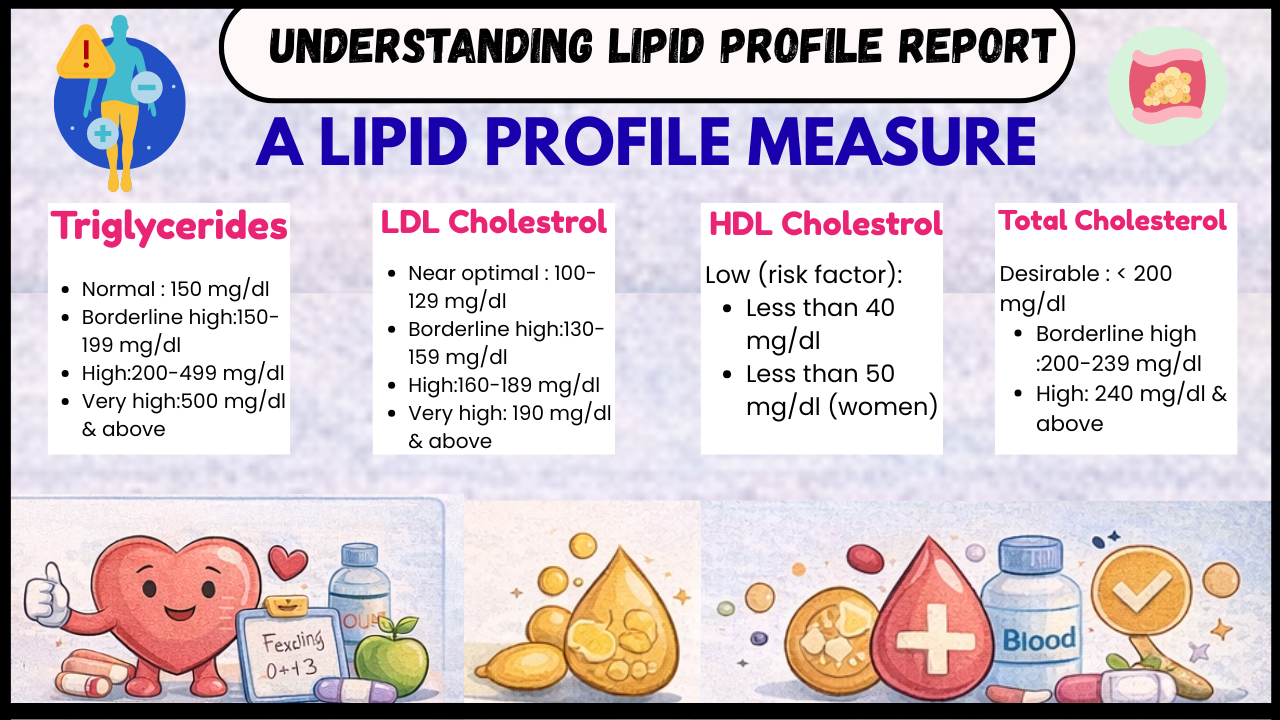
Triglycerides: As you eat, your body dissolves fats in your food into tiny molecules known as triglycerides. Increased levels of triglycerides in your blood raise the risk of cardiovascular disease. There are other factors that can up their levels such as obesity, unmanaged diabetes, excessive alcohol intake, and a high-calorie diet.
Normal: Less than 150 mg/dL
Borderline high: 150–199 mg/dL
High: 200–499 mg/dL
Very high: 500 mg/dL and above
Low-Density Lipoprotein cholesterol (LDL): LDL cholesterol is known as ‘bad’ cholesterol. Excess of this cholesterol can build up on the outline of your arteries. This increases your risk of heart attack, atherosclerosis, and stroke.
Optimal: Less than 100 mg/dL
Near optimal: 100–129 mg/dL
Borderline high: 130–159 mg/dL
High: 160–189 mg/dL
Very high: 190 mg/dL and above
Very low-density lipoprotein (VLDL): Your blood consists of another variant of cholesterol interconnected to a higher risk of cardiovascular disease known as VLDL.
High-Density Lipoprotein cholesterol (HDL): HDL cholesterol is known as ‘good’ cholesterol because it aids in eradicating LDL cholesterol from your blood.
Low (risk factor):
Less than 40 mg/dL (men)
Less than 50 mg/dL (women)
Protective: 60 mg/dL and above
Total Cholesterol: This is a total amount of LDL, HDL and VLDL in your blood. Total Cholesterol and HDL cholesterol are directly measured. LDL and VLDL are calculated values based on the total sum of HDL and triglycerides.
Desirable: Less than 200 mg/dL
Borderline high: 200–239 mg/dL
High: 240 mg/dL and above
Interpretation of lipid profile must correlate with
Age and sex
Presence of hypertension and diabeties
Smoking status
Family history
Body mass index
Existing cardiovascular disease
Management of Abnormal lipid profile
1.Lifestyle Modifications (First-line for most patients)
Balanced diet (low saturated fat, high fiber)
Regular aerobic exercise (150 minutes/week)
Weight reduction
Smoking cessation
Limiting alcohol intake
2. Pharmacological Therapy
Common medications include:
Statins (first-line drugs; reduce LDL significantly)
Ezetimibe
PCSK9 inhibitors
Fibrates (mainly for high triglycerides)
Niacin (less commonly used now)