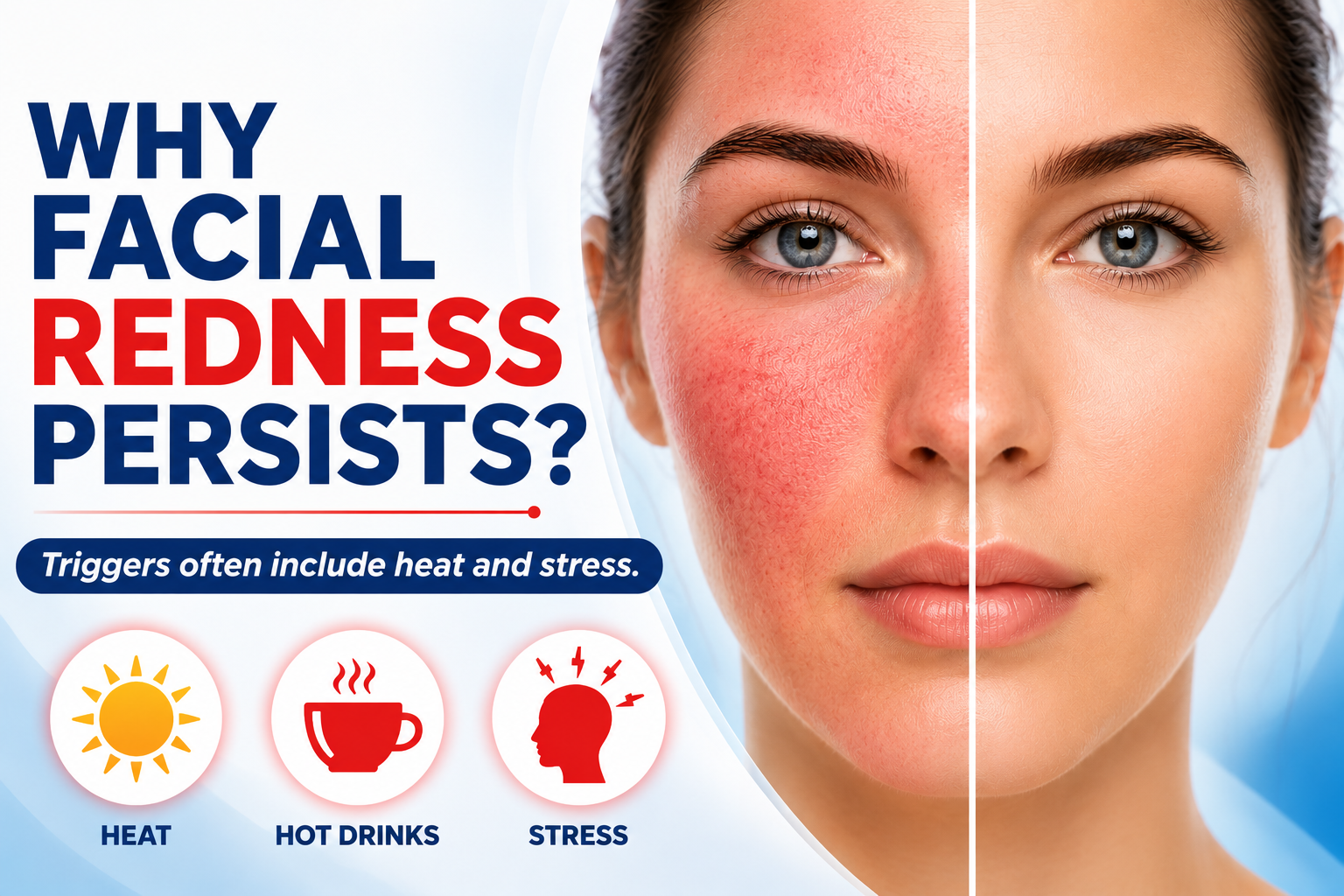
Why Facial Redness Persists?
“Triggers often include heat and stress.”
Many people experience frequent facial redness that seems to come and go without warning. They may notice flushing after being in the sun, drinking hot beverages, exercising, or feeling stressed. In some cases, the redness becomes more persistent over time. One common cause of this is rosacea, a chronic skin condition that primarily affects the face. Although rosacea cannot always be cured, identifying triggers and following proper treatment can help control symptoms and prevent flare-ups.
1. What is the Condition?
Rosacea is a chronic inflammatory skin condition that mainly affects the central part of the face, including the cheeks, nose, chin, and forehead.
The exact cause is not fully understood, but it is believed to involve a combination of genetic, immune, environmental, and blood vessel-related factors. Certain triggers can cause facial flushing and worsen symptoms.
For example, a person may notice that their face becomes red and warm after drinking hot coffee or spending time in the sun.
Common Types of Rosacea
Erythematotelangiectatic Rosacea (ETR) - Persistent redness and visible small blood vessels
Papulopustular Rosacea - Redness with acne-like bumps and pus-filled lesions
Phymatous Rosacea - Thickening of the skin, especially around the nose
Ocular Rosacea - Involves the eyes, causing irritation, dryness, and redness
2. Common Symptoms:
Persistent redness or a flushed appearance on the nose, cheeks, forehead, or chin
Visible blood vessels (tiny red lines) across the face
Acne-like bumps or pimples
Burning, stinging, itching, or sensitivity to skincare products
Dry, rough facial skin
Eye irritation, redness, or watering in some cases
Symptoms often flare up and improve in cycles.
3. Immediate Care or Treatment Steps
Rosacea can often be managed with a combination of trigger avoidance and medical treatment.
Helpful measures include:
Identifying and avoiding personal triggers
Using gentle, fragrance-free skincare products
Applying broad-spectrum sunscreen daily
Keeping the skin moisturized
Protecting the face from excessive heat and sunlight
Following prescribed treatments from a dermatologist
Doctors may recommend topical medications, oral medications, or laser treatments depending on the severity.
For example, a person who notices worsening redness after spicy foods may benefit from reducing their intake and monitoring symptom improvement.
4. What Not to Do
Do not use harsh facial scrubs or exfoliants, as this can worsen inflammation and trigger more flushing
Avoid very hot water on the face, as this can intensify blood vessel dilation
Do not use irritating skincare products containing strong alcohols or fragrances
Avoid excessive sun exposure without protection
Do not assume rosacea is simply acne and self-treat aggressively with acne medications, steroid creams, or bleaching products. These can irritate and make redness worse
Do not ignore eye symptoms (redness, burning, blurry vision); these may indicate ocular rosacea and need prompt evaluation.
5. When to Seek Medical Help
Medical advice should be sought if:
Facial redness becomes persistent (lasting weeks or months)
Acne-like bumps continue to recur
Eye symptoms such as dryness, pain, or blurred vision develop
Symptoms affect confidence or daily activities
Over-the-counter skincare measures are not helping
Early treatment may help prevent progression and reduce long-term skin changes.
6. Prevention Tips
While rosacea cannot always be prevented completely, flare-ups may be reduced by:
Using sunscreen every day
Identifying and avoiding personal triggers
Managing stress effectively
Protecting the skin from extreme temperatures
Following a gentle skincare routine
Keeping a diary of foods, activities, and environmental exposures that trigger symptoms
Rosacea is a common skin condition that often causes persistent facial redness, but it is not caused by poor hygiene and is not contagious. Understanding your personal triggers and seeking appropriate treatment can make a significant difference in symptom control. If you’re unsure whether your redness is rosacea or something else, a dermatologist can help you find the right path forward. With consistent care and lifestyle adjustments, many people with rosacea are able to keep flare-ups under control and maintain healthy, comfortable skin.