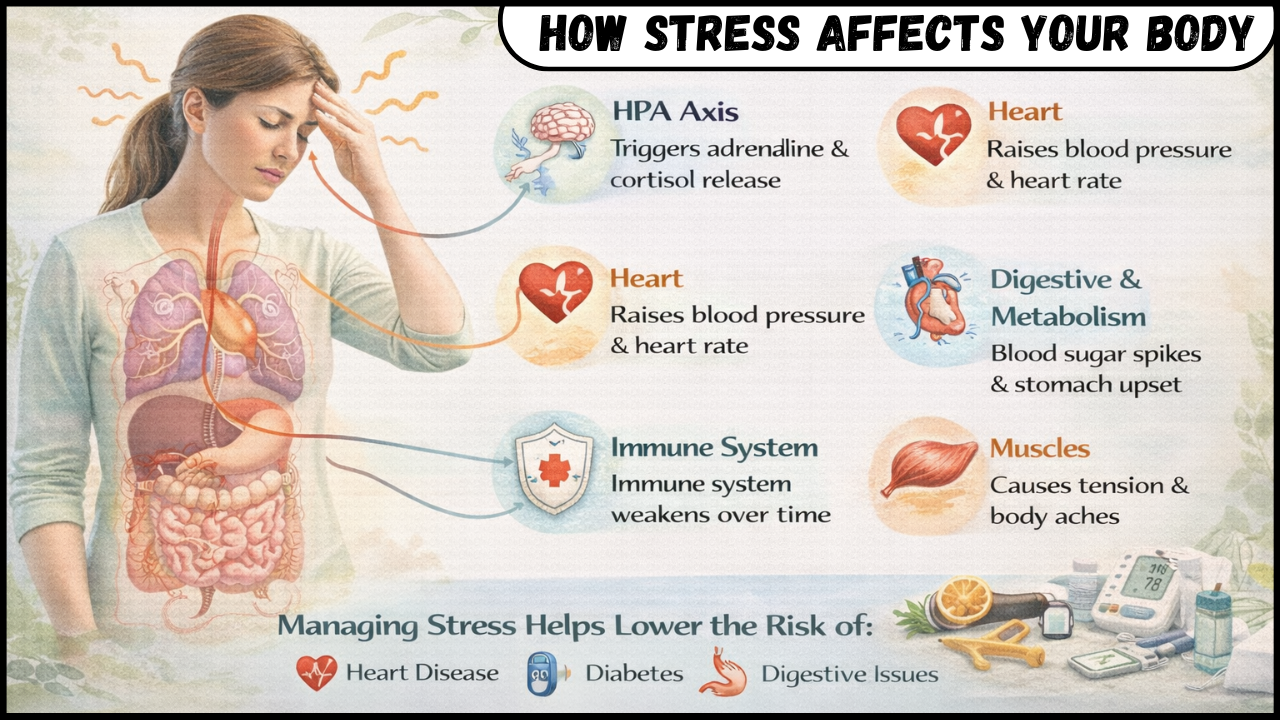
How Stress Affects Your Body
Some amount of stress is normal in life — but when it begins to interfere with your social or work life, it becomes unhealthy. The stress you keep holding inside always finds a way to show up. Slowly, your mind and body start feeling the impact.
We often underestimate the harmful effects of stress and the consequences of the vicious cycle it creates. Ever wondered why you're experiencing hair fall, acne, or unexplained body aches despite having no underlying health issue?
It’s the stress.
Because the human body works through a complex network of chemicals and brain coordination, stress affects several mechanisms in the body.
1. The HPA Axis
Whenever you feel stressed, the amygdala (your brain’s emotional processing center) sends a distress signal to the hypothalamus. The hypothalamus acts like a command center and communicates with the body through the autonomic nervous system.
This activates the HPA (Hypothalamic–Pituitary–Adrenal) axis, releasing hormones like adrenaline and cortisol.
Adrenaline increases heart rate and blood pressure to pump blood to your muscles.
Cortisol, the “stress hormone,” increases glucose in the bloodstream and modifies immune responses to prepare the body for repair — whether the stress is physical or psychological.
2. Heart & Heart Rate
During acute stress, your heart pumps faster to distribute oxygen — this is normal for short periods.
However, chronic stress keeps the heart in overdrive for weeks or months, leading to:
Hypertension: Constant high blood pressure damages artery walls.
Inflammation: Long-term cortisol exposure promotes plaque buildup, raising the risk of heart attack and stroke.
3. Digestion & Metabolism
You may have felt “butterflies” in your stomach or a tight knot of anxiety. This happens because the gut and brain are deeply connected through the vagus nerve.
During stress, the body slows digestion to conserve energy for “fight or flight.” This causes:
Altered Microbiome: Stress disrupts gut bacteria, causing bloating, pain, and discomfort.
Blood Sugar Spikes: Cortisol pushes the liver to release extra glucose for energy. If you're not physically active, this sugar remains in the blood and may lead to insulin resistance or Type 2 diabetes.
Increase in stomach acid, worsening acidity and indigestion.
4. Immune System: A Double-Edged Sword
In the short term, stress hormones boost immunity to prepare for potential injury.
But long-term stress flips the switch.
Chronic cortisol eventually suppresses immunity. This is why stressed individuals:
Get sick more often
Recover more slowly from wounds or infections
5. Musculoskeletal System
Stress causes your muscles to tense up instantly as a protective response.
If the stress never stops, your muscles never fully relax.
This leads to:
Tension headaches from tight neck and shoulder muscles
Chronic pain, especially lower back pain
How to Protect Your Body From Stress
The body has a natural “off switch” — the Parasympathetic Nervous System — and you can activate it consciously:
Deep Breathing: Slow, steady breaths stimulate the vagus nerve, lowering heart rate.
Physical Activity: Helps clear excess cortisol and adrenaline from the system.
Mindfulness: Staying present reduces overthinking and calms the amygdala.
GEWO Health
When stress takes over, your health shouldn’t pay the price. GEWO Health is here to guide you back to balance, clarity, and control.