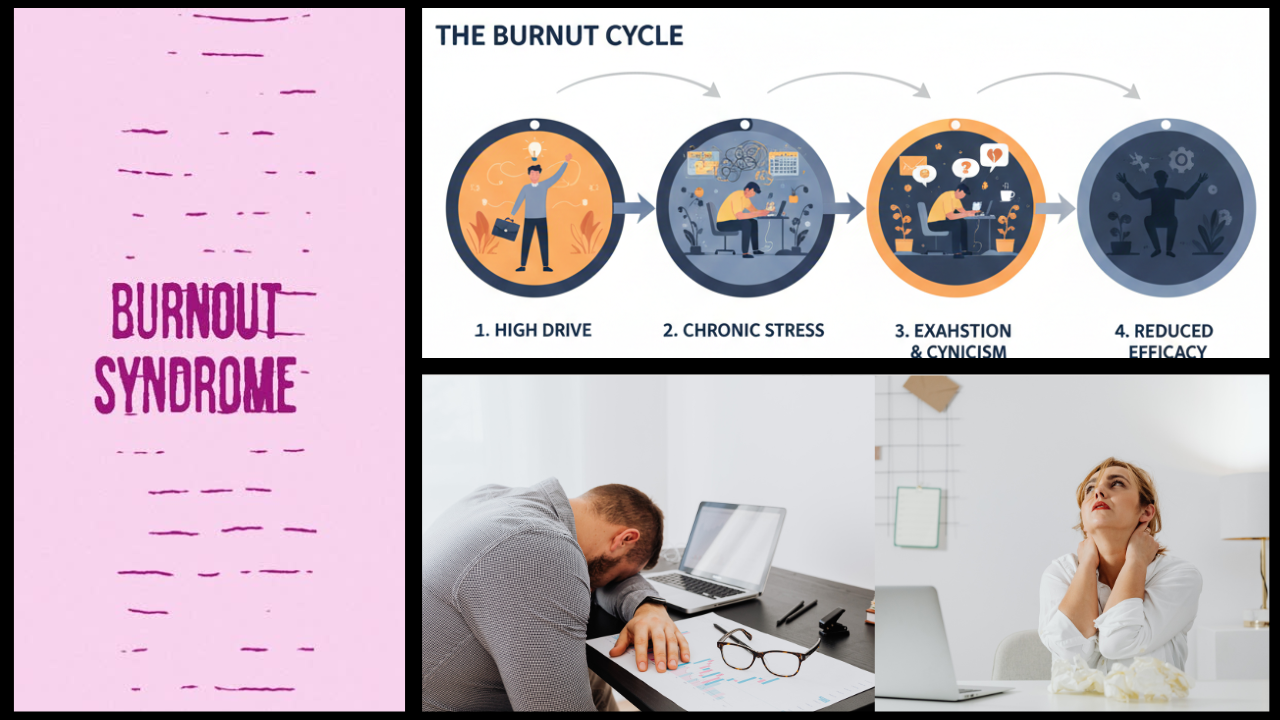
Burnout Syndrome: Causes, Symptoms, and Recovery Strategies
In today’s fast-paced world, feeling tired or stressed occasionally is common. However, when stress becomes constant and overwhelming, it can lead to burnout syndrome. Burnout is more than simple exhaustion—it is a state of emotional, physical, and mental depletion caused by prolonged stress, especially related to work or caregiving responsibilities. Recognizing burnout early is important because recovery is possible with the right support and lifestyle changes.
What Is Burnout Syndrome?
Burnout is a condition resulting from chronic, unmanaged stress. The World Health Organization describes burnout as an occupational phenomenon characterized by exhaustion, reduced effectiveness, and emotional detachment from work or responsibilities. Although commonly linked to professional life, burnout can also occur in students, caregivers, healthcare workers, and individuals managing long-term responsibilities.
Burnout develops gradually. Many people do not notice it until motivation, energy, and emotional balance are significantly affected.
Causes of Burnout
Burnout usually arises from a combination of personal, workplace, and lifestyle factors rather than a single cause.
1. Chronic Work Stress
Excessive workload
Long working hours
Lack of control over tasks
Unrealistic expectations
Constant deadlines
2. Emotional Demands
Jobs involving caregiving, decision-making, or emotional responsibility can increase vulnerability to burnout.
3. Lack of Work-Life Balance
When personal time, rest, and hobbies are neglected, stress accumulates without recovery.
4. Limited Support or Recognition
Feeling undervalued, unsupported, or disconnected from colleagues or family can worsen emotional exhaustion.
5. Personality and Lifestyle Factors
Perfectionism, difficulty saying no, or high self-expectations may increase risk.
Symptoms of Burnout
Burnout affects emotions, physical health, and behavior.
Emotional Symptoms
Persistent exhaustion
Loss of motivation
Feeling detached or cynical
Irritability or frustration
Reduced sense of accomplishment
Physical Symptoms
Chronic fatigue
Headaches or body pain
Sleep disturbances
Frequent illnesses
Low energy levels
Behavioral and Cognitive Symptoms
Difficulty concentrating
Reduced productivity
Procrastination
Withdrawal from social interactions
Increased reliance on caffeine, alcohol, or unhealthy coping habits
If left unaddressed, burnout may contribute to anxiety, depression, or physical health problems.
Burnout vs. Stress: What’s the Difference?
Stress often involves feeling overwhelmed but still engaged or motivated. Burnout, on the other hand, leads to emotional numbness, lack of motivation, and a sense of helplessness. Instead of feeling “too much,” burnout often feels like “nothing left to give.”
Recovery Strategies
Recovery from burnout requires intentional changes that restore energy, boundaries_toggle and emotional balance.
1. Recognize and Acknowledge Burnout
The first step toward recovery is accepting that burnout is real and deserves attention—not ignoring it or pushing harder.
2. Restore Work-Life Boundaries
Set realistic work hours
Take regular breaks
Learn to say no when necessary
Separate work time from personal time
3. Prioritize Rest and Sleep
Quality sleep allows the brain and body to recover from prolonged stress. Establish consistent sleep routines and reduce late-night screen use.
4. Reconnect with Meaningful Activities
Engage in hobbies or activities that bring joy and relaxation, such as reading, music, exercise, or spending time outdoors.
5. Strengthen Social Support
Talking with friends, family, or trusted colleagues helps reduce emotional burden. Sharing experiences often provides relief and perspective.
6. Practice Stress-Management Techniques
Helpful practices include:
Mindfulness and meditation
Deep breathing exercises
Yoga or gentle physical activity
Journaling thoughts and emotions
7. Seek Professional Support
If burnout leads to persistent sadness, anxiety, or inability to function, consulting a mental health professional can provide structured guidance and therapy.
Preventing Future Burnout
Prevention focuses on sustainable habits:
Maintain realistic expectations
Take regular vacations or rest periods
Celebrate small achievements
Develop healthy coping skills
Maintain balance between productivity and rest
Organizations also play an important role by promoting supportive work environments and reasonable workloads.
A Message of Hope
Burnout can make individuals feel stuck or emotionally drained, but recovery is possible. With awareness, self-care, supportive relationships, and sometimes professional guidance, energy and motivation can gradually return.
Burnout syndrome is a signal—not a failure. It is the mind and body asking for rest, balance, and care. Recognizing the signs early and taking steps toward recovery can restore well-being and prevent long-term mental and physical health consequences.
Taking care of yourself is not selfish; it is necessary for sustainable health, meaningful work, and a fulfilling life.