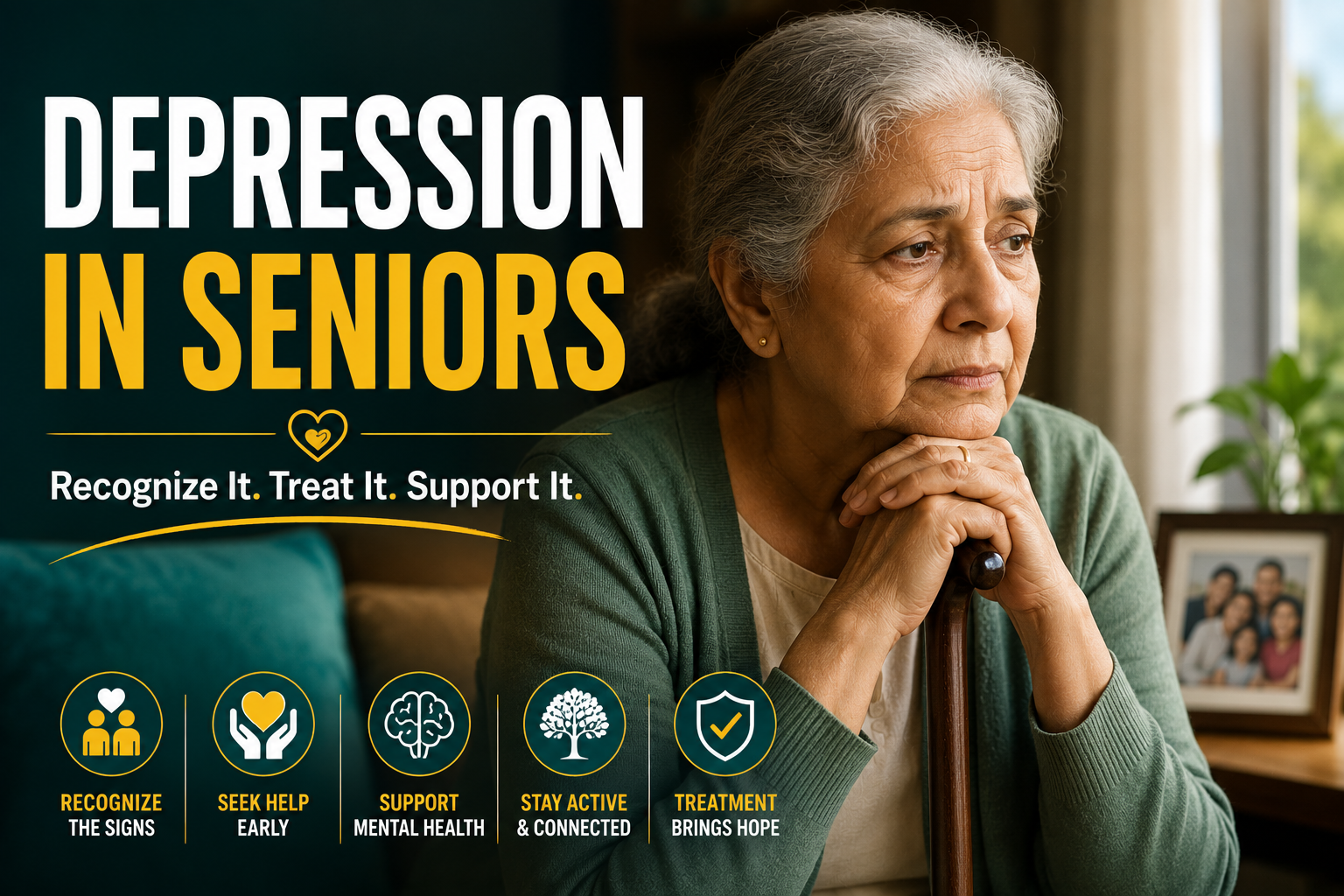
Depression in Seniors: Understanding, Recognizing and Treating This Common Condition
Introduction: Feeling sad or down occasionally is a normal part of life, but when these feelings persist for weeks or months, it may be depression.
Please note- depression is not a normal part of aging, yet it is the most common mental health condition affecting adults 65 years and older. About 14% of adults ages 60 and over live with a mental health condition, with anxiety and depression being the most prevalent. Despite its high prevalence, depression in seniors often goes unrecognized and untreated.
The good news is that depression is a treatable condition that requires medical attention and with the right treatment, older adults can get relief from symptoms. Therefore, understanding depression in seniors is crucial for families, caregivers and healthcare providers to ensure timely intervention and support.
Symptoms: Depression in older adults can present differently than in younger people. Seniors may not always report feeling "sad" but instead show other signs. Common symptoms include:
● Persistent sad, anxious, or "empty" mood that doesn't improve.
● Feelings of hopelessness, guilt, worthlessness, or helplessness.
● Loss of interest in once pleasurable activities, including sex.
● Decreased energy or fatigue that interferes with daily tasks.
● Moving or talking more slowly than usual.
● Difficulty concentrating, remembering, or making decisions.
● Sleep problems: difficulty sleeping, waking up too early, or oversleeping.
● Changes in appetite: eating more or less than usual, often with unintended weight gain or loss.
● Irritability, restlessness, or trouble sitting still.
● Increased use of alcohol or drugs.
● Neglecting personal care: skipping meals, forgetting medications, neglecting hygiene.
● Thoughts of death or suicide, or suicide attempts.
Contributing Factors:
● Health problems: Illness, disability, cognitive decline and damage to body image from surgery or sickness.
● Loneliness: Living alone, deaths or relocation of friends, decreased mobility.
● Life changes: Retirement, loss of spouse, children moving away, financial changes.
● Medications: Some medicines may worsen depression symptoms.
Prevention Tips: While not all depression can be prevented, certain strategies can reduce risk and support mental health:
➔ Stay socially connected: Maintain regular contact with family, friends, and community groups.
➔ Participate in enjoyable activities: Do things the person likes to do regularly.
➔ Exercise regularly: If approved by a healthcare provider, regular physical activity helps.
➔ Maintain good sleep habits: Establish consistent sleep routines.
➔ Limit alcohol and avoid illegal drugs: Reduce or eliminate substance use.
➔ Take medications correctly: Follow prescribed routines and discuss side effects with providers.
➔ Talk about feelings: Share emotions with someone you trust.
➔ Surround yourself with positive people: Build a caring, supportive social network.
➔ Watch for early signs: Learn to recognize depression's early warning signs and know how to react.
When to Consult a Doctor:
Seek medical attention if you notice:
● Persistent symptoms lasting 2 weeks or more that don't improve.
● Thoughts of death or suicide or any suicide attempts.
● Significant changes in sleep, appetite or energy affecting daily life.
● Withdrawal from activities previously enjoyed.
● Neglecting personal care or important responsibilities.
● Memory problems interfering with daily functioning.
● Increased alcohol or drug use.
Important: If someone is experiencing suicidal thoughts or attempting suicide, seek emergency help immediately. Depression requires medical attention and is treatable!
Treatment Awareness:
Primary Treatments-
1. Psychotherapy (Talk Therapy)
● Cognitive Behavioral Therapy (CBT).
● Interpersonal Psychotherapy (IPT).
● Group CBT or reminiscence therapy.
● Often combined with medication for best results.
2. Medication:
● Antidepressants prescribed by healthcare providers.
● May need to adjust or stop medications that worsen symptoms
● Often combined with psychotherapy.
3. Combined Approach
● Psychotherapy plus medication is most effective for many patients.
Additional Treatment Options:
● Electroconvulsive Therapy (ECT): Effective for major depression, especially in frail patients.
● Transcranial Magnetic Stimulation (TMS): Non-invasive brain stimulation.
● Exercise: Effective for mild-moderate depression, especially for those preferring non-pharmacological treatment.
● Psychological therapies: Helpful for mild-moderate depression.
GEWO Health Message: Depression is not a normal part of aging, it's a treatable condition. If you or someone you love is experiencing symptoms like persistent sadness, hopelessness, or loss of interest, seek help today. With the right treatment of psychotherapy, medication or both, recovery is possible, and your mental health matters at every age.
Medical Disclaimer: This article is for educational purposes only and provides general information based on current medical evidence. It is not intended to replace professional medical advice, diagnosis or treatment.
Always consult with a qualified healthcare provider for personal health concerns, before starting any new treatment. If you or someone you know is experiencing suicidal thoughts, contact emergency services immediately or reach a crisis hotline.
Depression is a serious medical condition that requires professional attention and treatment.
The information in this article reflects evidence from reputable sources including the National Institute on Aging, CDC and peer-reviewed medical journals, but individual cases may vary.