Other
Why Is My Elderly Loved One Acting So Different?
Have you noticed an elderly loved one acting unusually confused, angry, withdrawn, or forgetful? Sudden personality changes are not always a normal part of aging and may signal treatable conditions such as infections, stroke, medication side effects, depression, or dementia. Early recognition and medical evaluation can make a significant difference. Learn the warning signs, prevention tips, and when to seek urgent medical care to protect health and well-being.
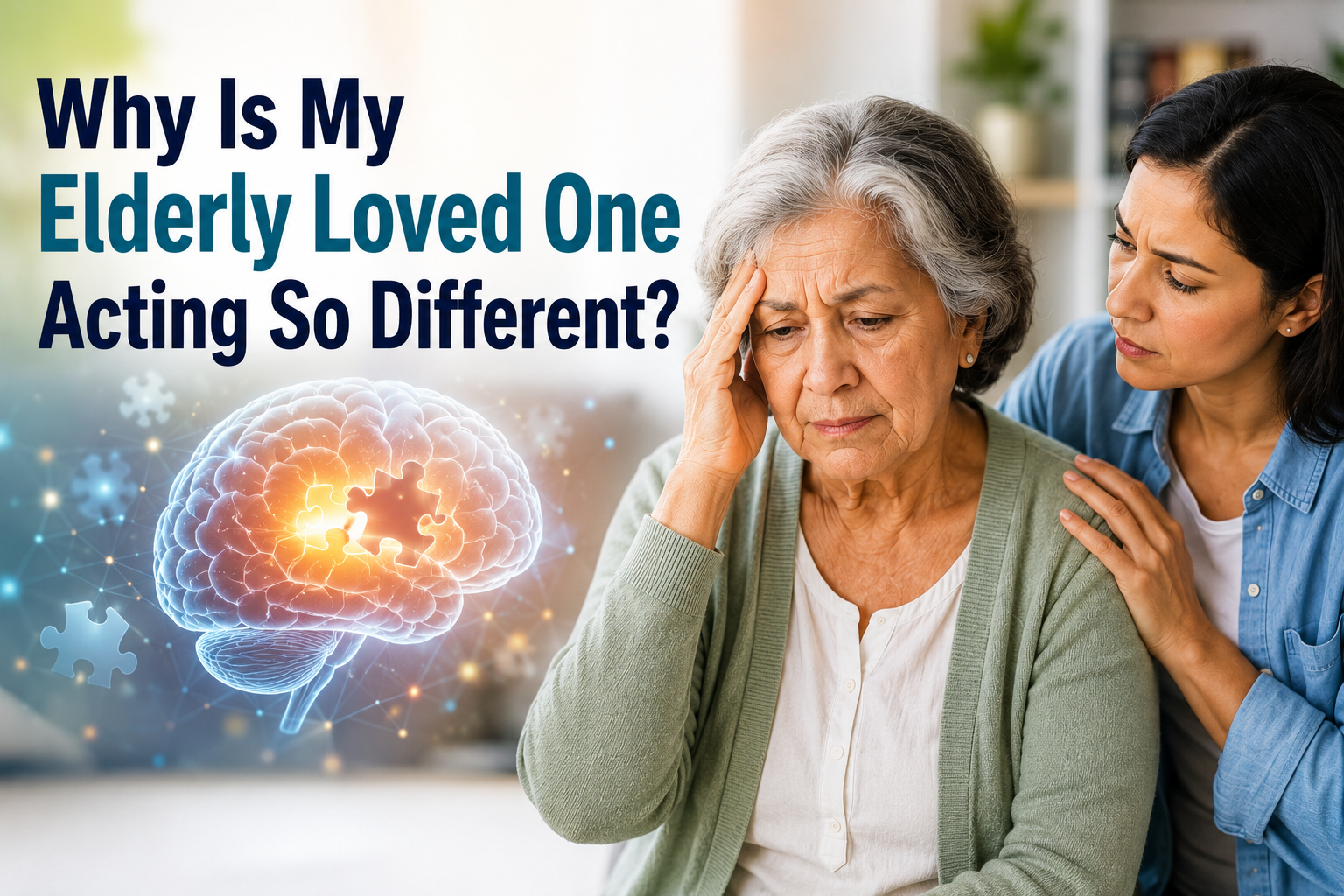
Have you noticed your elderly parent, grandparent, or spouse acting unlike themselves?
Maybe they have become suddenly angry, confused or withdrawn.
Many people think this is just "part of getting old," but that's not always true.
Sudden changes in personality or behavior can signal a medical problem that needs attention.
Think of it like a warning light on your car dashboard, basically it's telling you something needs
to be checked. The good news? Many causes are treatable if caught early.
1. Causes:
1. Common Medical Reasons are- Cause Simple Explanation
2. Urinary Tract Infection (UTI)-A very common infection that can cause sudden confusion and agitation in older adults (sometimes it's the ONLY sign).
3. Stroke A blood clot or bleed in the brain can change personality, especially if it affects the front part of the brain.
4. Dementia Alzheimer's and other dementias cause memory loss plus personality changes like suspicion, agitation or withdrawal.
5. Depression Older adults often show depression as irritability or anger, not sadness.
6. Brain Conditions Tumors, Parkinson's disease, or past head injuries can change how someone acts.
2. Medication Problems:
● Too many medicines = side effects and confusion.
● New medicines = sometimes cause mood changes.
● Alcohol = even small amounts can affect older adults more.
3. Life Changes That Affect Mood:
● Loss of a spouse or friend.
● Retirement or loss of independence.
● Feeling lonely or isolated.
Prevention Tips:
Daily Habits:
1. Keep them moving – Walking, light exercise or small daily activities help keep the brain
healthy.
2. Eat well – Fresh vegetables, fruits and less alcohol help brain health.
3. Stay connected – Encourage visits with family, friends or community groups. Loneliness
is very harmful to mental health.
4. Good sleep – Regular bedtime, quiet room, no screens before sleep
5. Keep learning – Reading, puzzles, or creative activities keep the mind sharp
Health Care Tips:
1. Medicine check – Once a year, ask a doctor to review all medicines and stop
unnecessary ones.
2. Control health problems – Keep blood pressure, diabetes, and heart disease under
control to prevent stroke.
3. Check for infections – If confused suddenly, check for UTI (painful urination, fever).
4. Use hearing/vision aids – Poor hearing or vision can cause confusion and isolation.
5. Watch for elder abuse – Unfortunately, 1 in 6 older adults are mistreated. Report suspected abuse immediately.
When to Consult a Doctor:
➢ Call Emergency Services Immediately If:
Red Flag -Sudden confusion (within hours) like they don't know where they are
What to Do-Call ambulance- could be stroke or other underling neurological emergency.
Red Flag -Weakness on one side, slurred speech, or face drooping
What to Do-Call ambulance- this is a stroke!
Red Flag -High fever, stiff neck, or severe headache Call ambulance- could be serious infection.
What to Do-Call ambulance- could be serious infection.
Red Flag -Violent or aggressive behavior Call for help immediately.
What to Do-Call for help immediately.
Red Flag -Talking about suicide or hurting someone Call ambulance or crisis line.
What to Do-Call ambulance or crisis line.
Red Flag -Very low consciousness (not waking up, very hard to wake)
What to Do-Call ambulance immediately.
➢ Call Your Doctor Soon (Within 1-2 Days) If:
● Personality changes lasted more than 2 weeks.
● They're more withdrawn, impulsive, or suspicious than usual.
● They're forgetting things more often or getting confused.
● They started a new medicine and then changed behavior.
Remember: Any major personality change in an older adult needs a doctor's check-up. Please
don't wait and assume it's "just aging".
Treatment Awareness:
❖ Medical Treatments:
● UTI: Antibiotics usually fix it quickly.
● Depression after strok: Antidepressant medicines are proven to help a lot.
● Mood swings after stroke: Antipsychotics used only for severe cases.
● Depression/Anxiety: Medicines + talking therapy work well.
❖ Helpful Therapies:
● Counseling/Talk therapy: Helps with anxiety, depression, and adjusting to life changes.
● Cognitive rehabilitation: Teaches new ways to do daily tasks after stroke.
● Problem-solving therapy: Helps handle difficult situations.
What Family Can Do:
● Reduce distractions - Turn off TV, minimize clutter when confused.
● Stay calm - Don't argue with delusions or false beliefs.
● Keep routine - Same meals, same bedtime gives security.
● Validate feelings - Say "I understand you're upset" instead of arguing.
Key message: Getting help early makes a huge difference in outcomes.
GEWO Health Message:
"Recovery is possible at any age."
At GEWO Health, we want you to know: Don't ignore sudden personality changes in your
elderly loved ones.
These aren't just "part of aging": they could be signs of a treatable condition.
Early detection saves lives and improves quality of life.
Medical Disclaimer:
This article is for information only, not medical advice. Every person is different, and only a qualified doctor can diagnose and treat medical conditions.
The information here comes from trusted sources like the World Health Organization, American
Stroke Association, and medical research.