Other
Why Balance Changes with Age: Inner Ear and Neurological
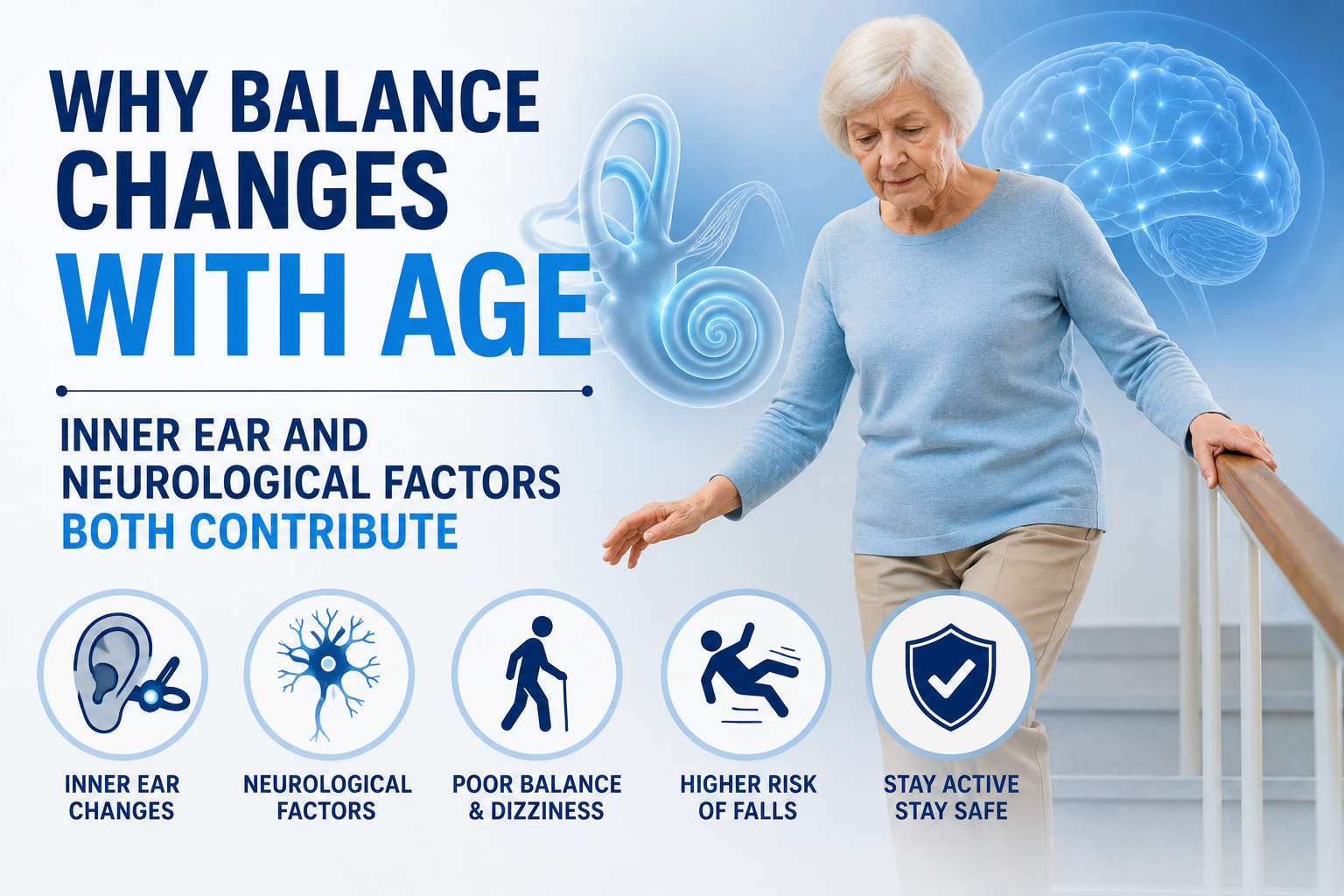
Balance naturally changes with age as the inner ear, brain, nerves, vision, and muscles become less efficient. This can lead to dizziness, unsteadiness, and an increased risk of falls. Regular strength and balance exercises, good vision care, medication reviews, and a safe home environment can help maintain stability. If you experience frequent falls, persistent dizziness, or sudden balance changes, consult a healthcare professional promptly.
Why Balance Changes with Age: Inner Ear and Neurological
Factors Both Contribute
Balance is the body’s ability to maintain position and move without falling. It relies on sensory input
(vision, inner ear, touch/proprioception), the brain processes this information, and the muscles respond.
As we age, changes in any of these systems can make balance less steady. For many older adults this is a gradual process, but even small declines increase the risk of trips, falls and loss of independence. This article explains why balance changes with age, how to recognize problems early, and what you can do to reduce risk and improve stability.
Symptoms:
Balance problems can show up in different ways.
Common signs include:
● Feeling unsteady when standing or walking.
● Dizziness, lightheadedness, or a spinning sensation (vertigo).
● Swaying or leaning to one side.
● Difficulty walking in the dark or on uneven surfaces.
● Frequent tripping, stumbling, or near-falls.
● Needing support (wall, handrail, or cane) to rise from a chair or climb stairs.
● Avoidance of activities you once did because you feel unsafe.
Causes and Risk Factors:
Several age-related changes in the inner ear and nervous system contribute to balance problems. Often more than one factor is present.
Inner ear (vestibular system):
● Loss of hair cells: The inner ear contains tiny hair cells that sense head movement, when these
cells decrease with age, it reduces sensitivity to motion and makes it harder to detect changes in
position.
● Degeneration of vestibular nerve: Nerve fibres that carry information from the inner ear to the
brain can thin with time, slowing or distorting signals.
● Benign paroxysmal positional vertigo (BPPV): Small calcium crystals in the inner ear sometimes
shift into the wrong place, causing brief, intense spinning with head movements. BPPV becomes
more common with age.
Neurological and sensory changes:
● Slower nerve conduction: Aging slows the speed at which nerves carry signals, so the brain takes
longer to react to balance threats.
● Reduced proprioception: Sensors in joints and muscles that tell your brain about limb position
(proprioceptors) become less accurate, so can cause less awareness of foot placement and joint
angles.
● Vision changes: Becomes less able to see contrasts, depth, or low-light conditions impairs visual
input that supports balance.
● Brain processing: Brain regions that integrate balance information (cerebellum, brainstem, and
cortical areas) can atrophy or work less efficiently.
Muscle and joint changes:
● Muscle loss and weakness: Sarcopenia (age-related muscle loss) reduces the strength needed to
recover from a stumble.
● Joint stiffness: Arthritis and reduced joint range of motion make rapid adjustments harder.
Medical conditions and medications:
● Cardiovascular issues: Low blood pressure, irregular heart rhythms, or poor circulation can cause
dizziness or faintness.
● Neurological diseases: Stroke, Parkinson’s disease, peripheral neuropathy (often from diabetes),
and other conditions impair balance.
● Medications: Sedatives, some blood pressure drugs, certain antidepressants, and others can
cause dizziness, drowsiness, or impaired coordination.
● Inner ear infections or Meniere’s disease can also produce balance symptoms.
Prevention Tips:
You can reduce your risk of balance problems and falls by addressing modifiable factors and building
strength and confidence.
Home safety and environment:
● Remove tripping hazards: Secure loose rugs, clear clutter, and keep walkways well lit.
● Improve lighting: Use brighter bulbs, nightlights, and motion-sensor lights for hallways and
bathrooms.
● Install supports: Handrails on stairs and grab bars in the bathroom reduce fall risk.
Exercise and physical conditioning:
● Strength training: Work lower-body muscles (quadriceps, glutes, calves) two or three times a
week.
● Balance exercises: Practice standing on one leg, tandem stance, heel-to-toe walking, or tai chi,
these improve balance and reduce falls.
● Flexibility and mobility: Gentle stretching and range-of-motion exercises maintain joint function.
● Vestibular exercises: For some inner-ear problems, specific head and eye movement exercises
(vestibular rehabilitation) help the brain adapt.
Vision and hearing:
● Regular eye checks: Update glasses and address cataracts or other visual problems promptly.
● Hearing care: Treat hearing loss; a hearing aid can improve spatial awareness and safety.
Medication review: Have a clinician review your medications annually to reduce or adjust drugs that
increase fall risk.
Lifestyle: Stay hydrated, limit alcohol, manage chronic conditions (diabetes, hypertension), and ensure good nutrition to support muscle and nerve health.
When to Consult a Doctor?
Seek medical attention if you experience:
● New, sudden, or severe dizziness or spinning.
● Recurrent falls or near-falls.
● Loss of movement, double vision, slurred speech, weakness, or sudden numbness (possible
stroke signs).
● Persistent imbalance that interferes with daily activities.
● Symptoms that follow a head injury or are associated with chest pain or fainting.
Early evaluation helps identify treatable causes (like BPPV, medication side effects, or low blood pressure) and prevents complications.
Treatment Awareness:
Treatment depends on the cause and can include:
● Vestibular rehabilitation: Tailored exercises from a physiotherapist to retrain the brain and
improve balance.
● Canalith repositioning maneuvers: Simple head movements (Epley maneuver) can cure BPPV in
many cases.
● Medication adjustments: Stopping or changing drugs that cause dizziness.
● Treating medical conditions: Managing diabetes, dehydration, or cardiovascular problems
reduces symptoms.
● Assistive devices: Canes, walkers, or orthotic shoe inserts improve safety while you work on
strength and balance.
● Surgery: Rarely needed for balance problems; reserved for selected inner-ear disorders or
neurological conditions.
GEWO Health Message:
At GEWO Health we encourage active aging through prevention and early action. Simple steps like regular balance and strength exercises, periodic vision and medication reviews, home safety adjustments and timely medical consultation helps to go a long way toward preserving mobility and independence.
Small daily practices build resilience: stand on one leg while brushing your teeth, take a short strength routine after warming up, and keep pathways home-free and well lit.
Medical Disclaimer:
This article provides general information and is not a substitute for professional medical advice,
diagnosis, or treatment.