Other
Understanding Dementia: A Simple Guide for Everyone
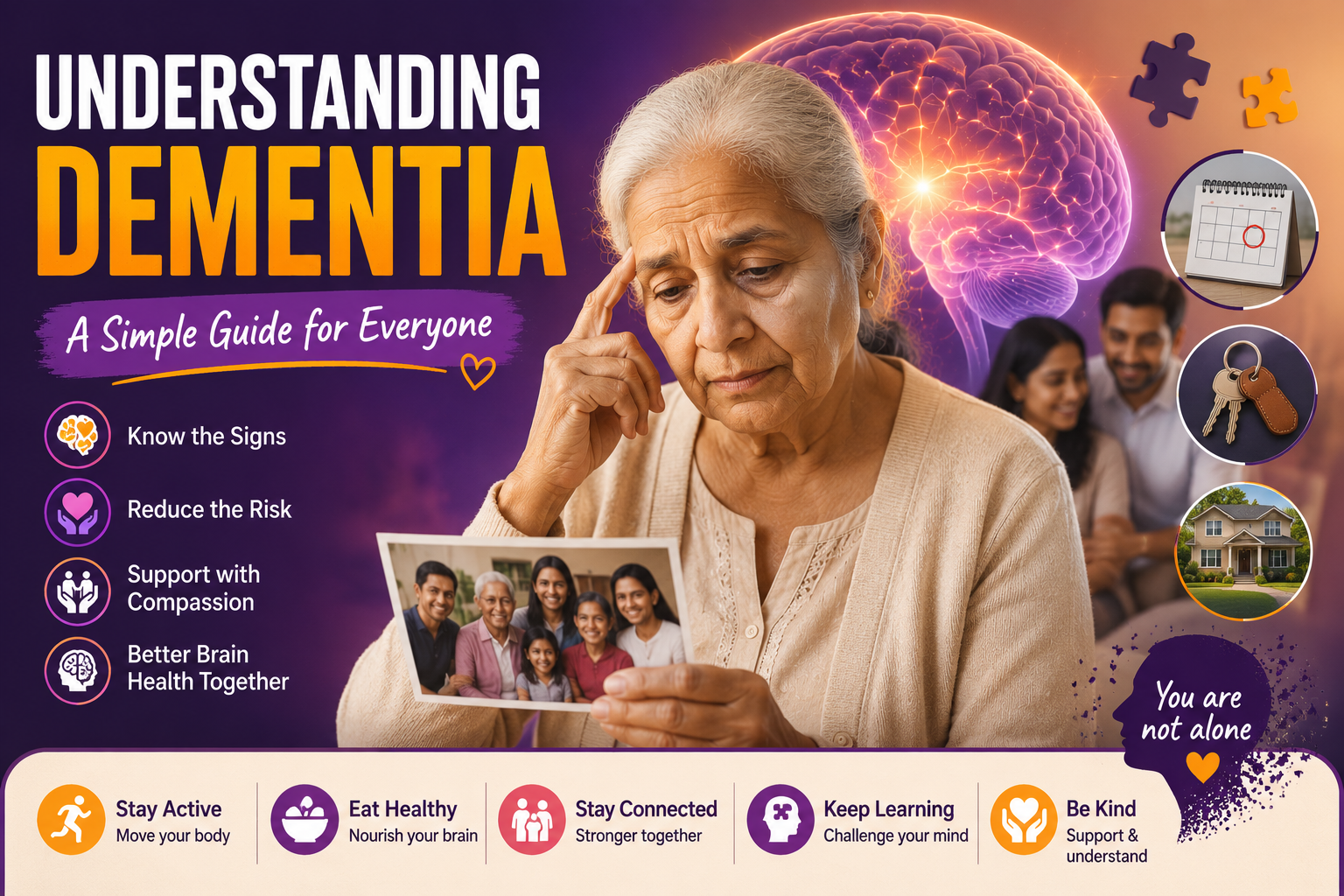
Dementia is not a normal part of aging. It is a group of conditions that affect memory, thinking, communication, and daily functioning. Early signs may include forgetfulness, confusion, difficulty completing familiar tasks, or changes in mood and behavior. While age is a major risk factor, healthy lifestyle habits, early diagnosis, and proper support can help improve quality of life. Understanding dementia is the first step toward reducing stigma and promoting better brain health.
What is Dementia?
According to the World Health Organisation (WHO) International Classification of Diseases (ICD-10), dementia is defined as a chronic or progressive neurocognitive syndrome characterised by disturbances in multiple higher cortical functions, including memory, thinking, orientation, comprehension, learning capacity, language and judgement.
The diagnosis requires patients to be in clear consciousness to distinguish dementia from conditions such as delirium, while cognitive decline is often accompanied by changes in emotional regulation, social behaviour and motivation.
Importantly, these impairments must be severe enough to interfere with an individual's independence and activities of daily living. In the updated ICD-11 classification, dementia is categorised under neurocognitive disorders, emphasising measurable impairment across multiple cognitive domains beyond that expected with normal biological ageing.
Dementia is not a specific disease but a group of symptoms that seriously affect daily life. It is not a normal part of aging. Most people are diagnosed after age 65, but it can also start earlier.
How Common is Dementia?
In the World
About 57 million people have dementia globally (2021).
Nearly 10 million new cases happen every year (1 new case every 3 seconds).
By 2030, this will grow to 78 million people.
By 2050, 139 million people will have dementia.
Over 60% of people with dementia live in low- and middle-income countries like India.
In India:
About 8.8 million Indians have dementia.
7.4% of adults above 60 years have dementia. 90% of cases are not diagnosed (most people don't know they have it).
India's elderly population will nearly double by 2050.
Dementia costs India over $3 billion every year.
More common in rural areas and among women.
What Happens in the Brain?
Dementia happens when brain cells get damaged and cannot communicate properly.
There are different types:
Type-Alzheimer's disease
How Common-60–70% of cases
What Causes It-Protein clumps (amyloid and tau) damage brain cells.
Type-Vascular dementia
How Common-Many cases
What Causes It-Strokes or poor blood flow to the brain.
Type-Lewy body dementia
How Common-Fewer cases
What Causes It-Abnormal protein deposits cause hallucinations.
Type-Frontotemporal dementia
How Common-Fewer cases
What Causes It-Affects personality and language areas.
Signs and Symptoms:
Early signs you might notice:
Area-Memory
What Happens-Forgets recent events, asks the same questions again, loses things often.
Area-Thinking
What Happens-It is hard to solve problems, make decisions or follow plans.
Area-Getting Lost
What Happens-Gets lost in familiar places, confused about time or date.
Area-Language
What Happens-Trouble finding words, following conversations.
Area-Daily Tasks
What Happens-Difficulty cooking, managing money or doing familiar tasks.
Area-Vision
What Happens-Misjudges distances, trouble reading.
Mood and behavior changes:
Feels anxious, sad, or angry about memory loss.
Becomes more withdrawn or less interested in others.
Personality changes, acts inappropriately.
Agitation, aggression, or seeing things that aren't there (especially in Lewy body dementia).
Later stages:
Cannot recognize family or friends.
Needs help eating, dressing, and using the bathroom.
Loses control of bladder and bowels.
Risk Factors
Things you cannot change:
Age: Risk increases after 65 years (6 times higher in 80+ vs 65–79 years).
Family history: Having a parent or sibling with dementia.
Genetics: Some genes (like APOE-e4) increase risk.
Things you CAN change (45% of dementia cases are preventable):
Risk Factor-Low education (before age 45)
How Much It Increases Risk-60% higher risk.
Risk Factor-Hearing loss (midlife)
How Much It Increases Risk-40% higher risk.
Risk Factor-Diabetes, head injury (midlife)
How Much It Increases Risk-70% higher risk each.
Risk Factor-Smoking, obesity, high cholesterol
How Much It Increases Risk-30% higher risk each.
Risk Factor-Heavy alcohol use, depression, high blood pressure
How Much It Increases Risk-20% higher risk each.
Risk Factor-Social isolation, no exercise, poor sleep
How Much It Increases Risk-Increases risk.
Most common risk factors today: High blood pressure, obesity, and diabetes are now the biggest causes of dementia risk worldwide.
Prevention Tips
You cannot prevent all dementia, but you can reduce your risk by taking care of these factors:
Do these things:
Stay active: Exercise 150 minutes per week (brisk walking, cycling, swimming) plus strength training twice a week.
Eat healthy: Eat more fruits, vegetables, whole grains, fish, nuts, and olive oil. Less red meat and processed food.
Control blood pressure: Get it checked regularly and take medicine if needed.
Control diabetes: Keep blood sugar in check with diet, exercise, and medicine.
Treat hearing loss: Use hearing aids if you have trouble hearing.
Stay social: Spend time with family, friends, and community.
Keep learning: Read, do puzzles, learn new skills or hobbies.
Protect your head: Wear helmets when cycling or skiing.
Sleep well: Get 7–8 hours of good sleep every night.
Manage stress: Practice relaxation, talk to someone if feeling depressed.
Avoid these: smoking, limit alcohol, avoid isolating yourself.
When to See a Doctor?
See a doctor if you or your family member:
Forgets things that affect daily life (missing appointments, not paying bills).
Gets lost in familiar places like neighborhood or market.
Cannot do familiar tasks like cooking or managing money.
Has personality changes or acts differently than usual.
Has trouble speaking or finding words.
Has mood changes like sadness, anger, or anxiety about memory.
Treatment Options
Medicines that help:
Cholinesterase inhibitors (donepezil, rivastigmine): Help with memory and thinking in Alzheimer's, vascular dementia and Lewy body dementia.
Memantine: Helps in moderate to severe Alzheimer'spubmed.ncbi.nlm.nih+1
Antidepressants: For severe depression with dementia.
Antipsychotics: Only for severe agitation or aggression (use with caution due to side effects).
New treatments (2024–2025): Lecanemab and donanemab, new injections that slow memory decline by about 25% in early Alzheimer's. They need special brain scans or blood tests first and have side effects.
Non-medical care (very important): Keep a regular daily routine (same meal times, sleep times), Caregiver education and support groups, Physical activity to stay mobile, Music therapy, reminiscence therapy and other activities, Adjust home for safety (remove trip hazards, add labels).
GEWO Health Message
At GEWO Health, we want you to know: Dementia is serious but partly preventable. With 8.8 million Indians affected and 90% not diagnosed, we need to act now.
What we can do:
Learn the signs and get tested early if worried.
Take care of heart health (blood pressure, diabetes, weight).
Stay active physically and mentally.
Support caregivers who take care of patients.
Talk openly about dementia to reduce stigma.
Over 60% of the world's dementia patients live in countries like India.
We need better support, more clinics and awareness so everyone can get help. You are not alone.
Medical Disclaimer
This article is for information only and is based on WHO guidelines, research studies and medical guidelines. It is not a substitute for professional medical advice.
Always talk to a doctor for diagnosis and treatment.
Do not stop or change medicines without your doctor's advice.
Seek emergency care if someone has sudden confusion, falls, or safety problems.
Every person is different, so treatment should be planned with your doctor.
If you are worried about memory or thinking problems, please see a healthcare provider.
Early help makes a big difference.