Disease Prevention
Tight Band Around Your Head?
A tight or pressing feeling around the head is commonly associated with tension-type headaches. Stress, poor posture, screen time, eye strain, dehydration, skipped meals, poor sleep, and muscle tension can trigger or worsen them. Learn simple ways to prevent and manage tension headaches, recognize warning signs, and know when frequent, severe, or unusual headaches need medical attention. Small lifestyle changes can make a meaningful difference.
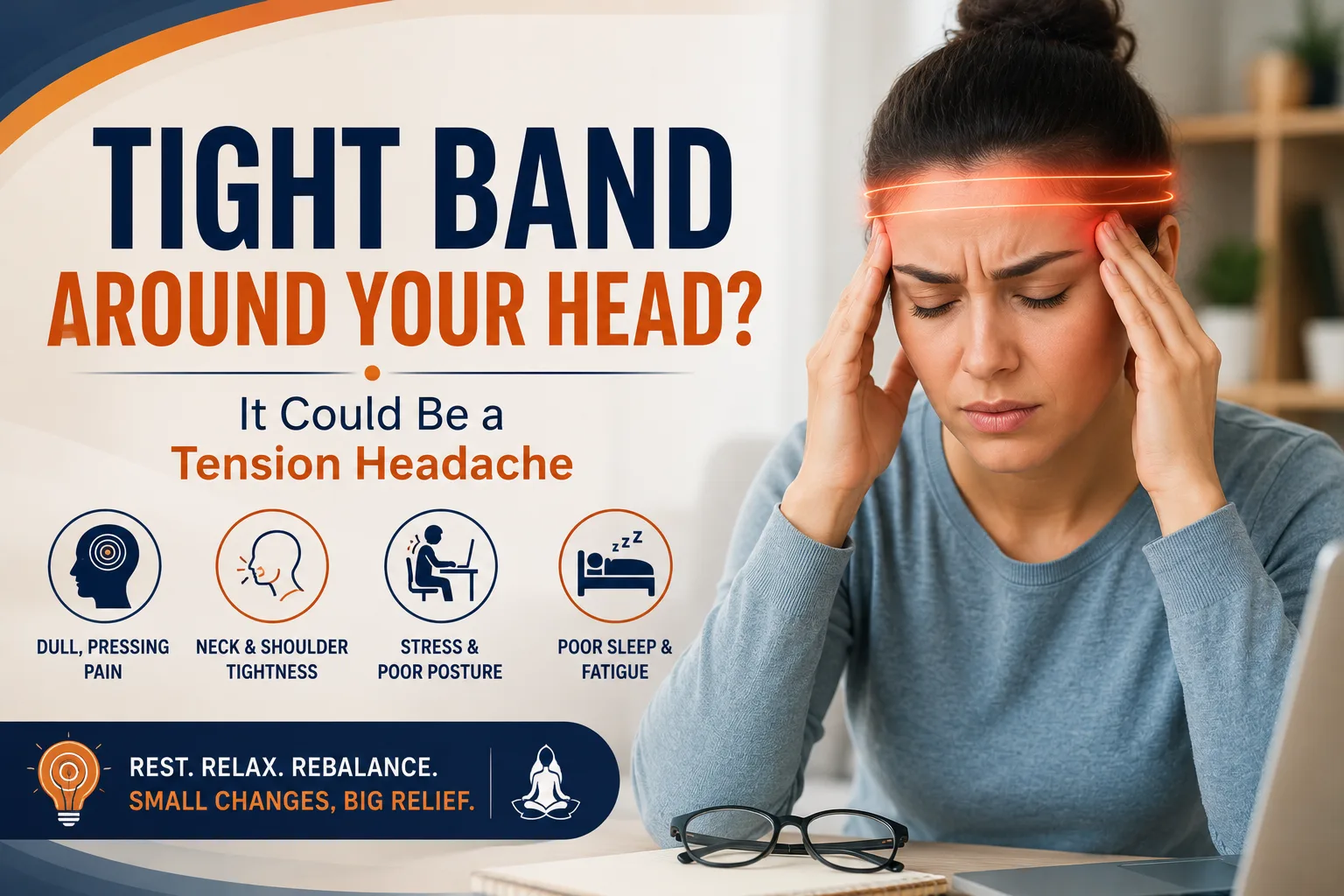
A dull ache, pressure across the forehead, or a feeling that a tight band is wrapped around your head may be a tension-type headache. It is one of the most common types of headache and can affect people of any age.
Tension headaches are often linked with emotional stress, tiredness, poor posture, eye strain, inadequate sleep, dehydration, or prolonged use of computers and mobile devices. The pain is usually mild to moderate and does not typically worsen with routine activities such as walking or climbing stairs. However, even a “mild” headache can affect concentration, work, sleep, and quality of life. Most tension headaches are not dangerous and improve with rest, healthy habits, stress management, or appropriate treatment. However, a new, severe, unusual, or progressively worsening headache should not be ignored.
Symptoms:
Tension headaches commonly cause:
● A dull, aching, pressing, or tightening pain.
● A sensation of pressure across the forehead or around the head.
● Pain on both sides of the head, face, or neck.
● Tenderness in the scalp, temples, neck, or shoulder muscles.
● Tightness or stiffness in the neck and upper back.
● Increased discomfort when the scalp or neck muscles are touched.
Unlike migraine, tension headaches usually do not cause intense throbbing pain, repeated vomiting, or marked sensitivity to light and sound. Some people may still experience mild sensitivity to light or sound.
A tension headache may last from 30 minutes to several hours and, in some cases, may continue for several days. It may occur occasionally or become frequent. Headaches occurring on 15 or more days each month for more than three months are considered chronic and require medical assessment.
Causes and Risk Factors:
The exact cause of tension headaches is not always clear. Tight or overworked muscles in the head, neck, jaw, and shoulders may contribute, particularly when combined with stress or fatigue.
Common triggers and risk factors include:
● Stress and anxiety: Emotional pressure may cause unconscious tightening of the scalp, jaw, neck, and shoulder muscles.
● Poor posture: Bending over a laptop, looking down at a phone, or sitting without back support can strain the neck and upper back.
● Eye strain: Long periods of screen use, inadequate lighting, or an uncorrected vision problem may contribute.
● Sleep difficulties: Too little sleep, irregular sleep schedules, or poor-quality sleep can increase headache risk.
● Skipped meals: Missing meals may lead to low energy and make headaches more likely.
● Dehydration: Not drinking enough fluids can trigger or worsen head pain.
● Caffeine changes: Excessive caffeine or suddenly reducing regular caffeine intake may cause headaches.
● Jaw clenching or teeth grinding: This may occur during stress or sleep and can strain the facial and temple muscles.
● Neck or shoulder problems: Muscle tension, prolonged driving, or repetitive work may play a role.
● Medication overuse: Frequent use of pain-relieving medicines can itself lead to more frequent headaches.
Keeping a headache diary can help identify personal triggers. Record when the headache began, how long it lasted, its severity, possible triggers, sleep quality, meals, fluid intake, menstrual patterns where relevant, and medicines taken.
Prevention Tips:
Small, consistent changes can reduce the frequency and severity of tension headaches:
1. Manage stress regularly- Try slow breathing, meditation, progressive muscle relaxation, yoga, or a brief walk. Taking short breaks during a demanding day may prevent stress from building up.
2. Improve screen habits- Follow the 20-20-20 approach: every 20 minutes, look at something approximately 20 feet away for 20 seconds. Adjust screen brightness, maintain a comfortable viewing distance, and avoid prolonged neck bending.
3. Pay attention to posture- Keep your head aligned over your shoulders, support your lower back, and relax your shoulders. Change position regularly instead of sitting continuously for long periods.
4. Maintain a regular sleep routine- Aim for adequate sleep and try to go to bed and wake up at consistent times. Avoid using screens immediately before bedtime if they interfere with sleep.
5. Eat regularly- Do not routinely skip breakfast or other meals. Choose balanced meals containing vegetables, fruits, whole grains, and protein.
6. Drink enough fluids- Keep water available throughout the day, especially during hot weather, exercise, fever, or prolonged travel.
7. Relax the jaw and shoulders- Avoid clenching your teeth. Gentle neck and shoulder stretches may help, provided they do not cause pain.
8. Stay physically active- Regular, moderate activity can support sleep, mood, muscle health, and stress control.
9. Use caffeine thoughtfully- Avoid large amounts of caffeine and discuss a gradual reduction with a healthcare professional if you consume it regularly.
10. Avoid frequent self-medication- Using painkillers too often can result in medication-overuse headaches. Follow label instructions and seek medical advice if headaches recur frequently
When to Consult a Doctor?
Arrange a medical consultation if:
● Headaches are becoming more frequent, severe, or disruptive.
● You need pain medicine repeatedly.
● Headaches last for several days or keep returning.
● The headache pattern changes suddenly.
● Headaches begin after starting a new medicine. ● You have frequent headaches along with jaw clenching, sleep problems, vision concerns, or neck pain.
● You are pregnant, have recently sustained a head injury, or have a condition affecting immunity or blood clotting.
Seek urgent medical help for a sudden, extremely severe headache, particularly one that reaches maximum intensity within seconds or minutes. Immediate assessment is also needed if headache occurs with weakness or numbness, facial drooping, trouble speaking, confusion, fainting, loss of vision, seizure, repeated vomiting, high fever, stiff neck, or a rash. A severe headache after a significant head injury also requires urgent evaluation. These symptoms may indicate a condition more serious than a tension headache.
Treatment Awareness:
➔ Treatment depends on how often the headaches occur and whether another condition is contributing.
➔ For an occasional tension headache, rest, hydration, gentle stretching, a quiet environment, relaxation exercises, or a warm or cool compress over the neck may provide relief. Some adults may benefit from an appropriate over-the-counter pain reliever, such as paracetamol or ibuprofen, when used according to the product label and their clinician’s advice. Ibuprofen and similar medicines may not be suitable for everyone, including some people with stomach ulcers, kidney disease, certain cardiovascular conditions, blood-thinning treatment, or pregnancy.
➔ Do not combine medicines containing the same ingredient, and do not use painkillers frequently without medical advice. A pharmacist or doctor can help you select a safer option based on your age, other medicines, pregnancy status, and health conditions.
➔ If headaches are frequent or chronic, a doctor may review your symptoms, examine your nerves and muscles, assess sleep and stress, and determine whether preventive treatment is appropriate. In some cases, prescription preventive medicines, physiotherapy, behavioural approaches, or treatment for migraine, jaw problems, vision issues, or sleep disorders may be considered. Preventive medicines should be taken only under professional supervision.
GEWO Health Message:
A tight band around your head may be your body’s reminder to pause but recurring or unusual headaches deserve attention.
G- Get regular sleep and meals.
E- Ease stress with breathing, movement, or relaxation.
W- Watch your posture, screen time, hydration, and medicine use.
O- Obtain medical advice for frequent, severe, changing, or warning-symptom headaches.
Listen to your symptoms, identify your triggers, and seek help when the pattern does not feel typical for you.
Medical Disclaimer:
This article is intended for general health education and does not replace consultation with a qualified healthcare professional. Headache symptoms can overlap with migraine, eye problems, sinus disease, medication effects, high blood pressure, infection, stroke, and other conditions. Do not rely on this article to diagnose or treat yourself. Seek urgent medical care for a sudden severe headache or any headache accompanied by neurological symptoms, fever with neck stiffness, confusion, fainting, vision loss, or serious injury