Other
Stroke Prevention: What Patients Should Know?
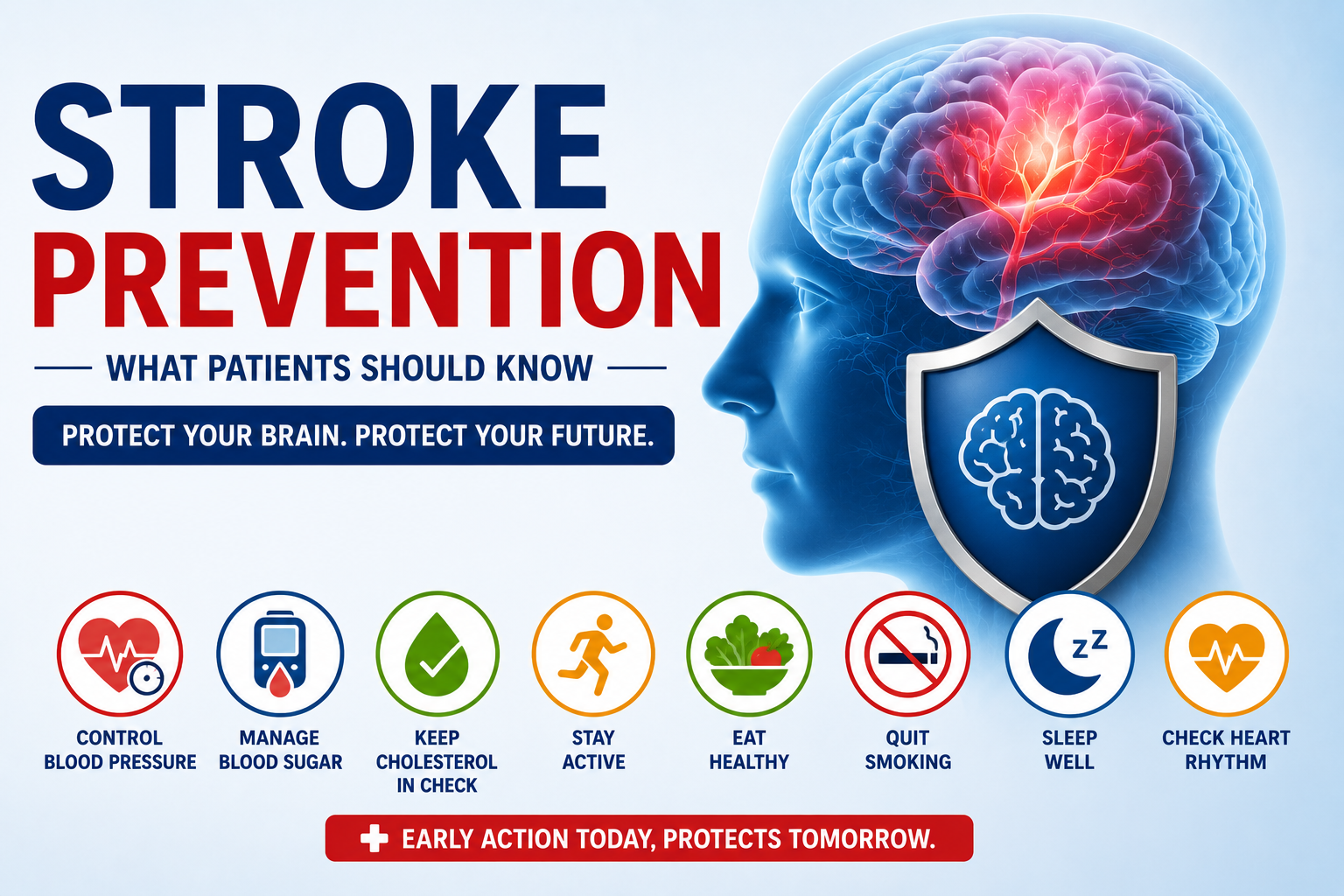
Many strokes can be prevented by managing everyday health risks. Control your blood pressure, blood sugar, and cholesterol, stay physically active, eat a balanced diet, avoid smoking, and limit alcohol. Learn the BE-FAST warning signs and seek emergency care if symptoms appear. Regular check-ups and early treatment of conditions like atrial fibrillation can significantly reduce your risk and help protect your brain for the future.
Stroke Prevention: What Patients Should Know?
A stroke happens when blood flow to part of the brain is blocked or when a blood vessel in the brain
bursts. Brain cells start to die quickly, so preventing stroke is far better than treating one after it happens.
The good news is that many strokes can be prevented by addressing everyday habits and medical risks.
Think of stroke prevention as protecting your brain’s blood supply for the long term. Some risk factors
are fixed, such as age or family history, but many are modifiable through treatment and lifestyle changes.
The Biggest Risk Factor:
High blood pressure is one of the most important stroke risk factors, and controlling it can make a major difference. If your doctor has prescribed blood pressure medicine, taking it regularly matters even when you feel well, because hypertension often causes no symptoms. For many people with prior stroke or TIA, a blood pressure goal below 130/80 mm Hg is recommended (but it also depends on age, make sure it's not more than 140/90).
Blood sugar and cholesterol also matter, as diabetes increases the risk of future stroke, and lowering LDL cholesterol with statins is often part of prevention, especially after ischemic stroke or TIA.
Regular follow-up helps your care team adjust treatment before problems build up.
Everyday Habits That Help:
● Food choices can lower stroke risk, a healthy eating pattern emphasises vegetables, fruits, whole
grains, legumes, nuts, fish, and low-fat dairy while limiting sodium, sweets, and red meats. This
style of eating supports blood pressure, weight control, and cholesterol improvement at the
same time.
● Physical activity is another powerful tool, regular moderate exercise helps reduce stroke risk and
improves blood pressure, blood sugar, and weight. Even if you cannot do long workouts, shorter
sessions done consistently still help, and supervised exercise may be useful if you have physical
limitations.
● Smoking is a major danger, It approximately doubles stroke risk, so quitting is one of the
strongest steps you can take. If you drink alcohol, keep it modest; heavy drinking raises risk,
while lower intake is safer.
Heart Rhythm And Sleep:
● Atrial fibrillation: an irregular heart rhythm, can send clots to the brain and raise ischemic stroke
risk several-fold. Many people do not feel it, so it is important to get checked if your doctor
suspects it or if you have palpitations, dizziness, or a history of heart disease. People with atrial
fibrillation and prior stroke or TIA may need blood-thinning medicine to reduce risk.
● Sleep apnea is another often-overlooked risk factor, loud snoring, choking during sleep, or
daytime sleepiness can be clues, and treatment may improve both sleep and vascular health. If
these symptoms are present, bring them up at your next medical visit.
Warning Signs!
➢ Knowing stroke symptoms can save a life.
➢ Use the BE-FAST rule: Balance loss, Eye changes, Face drooping, Arm weakness, Speech difficulty,
and Time to call emergency services immediately. Stroke is always a medical emergency, because
delays can lead to permanent brain injury.
➢ If symptoms appear suddenly, do not wait to see whether they improve. Call emergency services
right away and note the time when the person was last known to be well.
➢ Fast action can open the door to treatments that may reduce disability.
A Simple Prevention Plan:
A practical stroke prevention plan often includes:
● Check blood pressure regularly and take medicines as prescribed.
● Control diabetes and cholesterol with follow-up and treatment.
● Stop smoking and avoid secondhand smoke.
● Move more most days of the week.
● Eat more plant-based, high-fiber foods and less salt.
● Keep alcohol low or avoid it if advised.
● Ask about atrial fibrillation and sleep apnea if relevant.
The best plan is the one you can actually follow every day. Small, steady changes often work better than drastic changes that do not last.
When To See A Doctor?
See a doctor if you have high blood pressure, diabetes, high cholesterol, irregular heartbeat, loud snoring with daytime sleepiness, or a family history of stroke. If you have already had a stroke or TIA, prevention becomes even more urgent, because recurrence risk is significant. Your doctor may recommend medicines, tests, and lifestyle changes based on your personal risk profile. Stroke prevention is not about doing one thing perfectly. It is about managing several small risks consistently so your brain stays protected over time.