Disease Prevention
Silent Heart Attack: When “No Chest Pain” Does Not Mean No Danger?
A silent heart attack can happen with little or no chest pain, but it can still damage the heart. Unusual fatigue, shortness of breath, sweating, nausea, dizziness, or discomfort in the jaw, back, neck, shoulder, or arm may be warning signs. Learn the risk factors, prevention tips, and when to seek urgent medical care. Recognizing subtle symptoms early can help protect your heart and prevent serious complications.
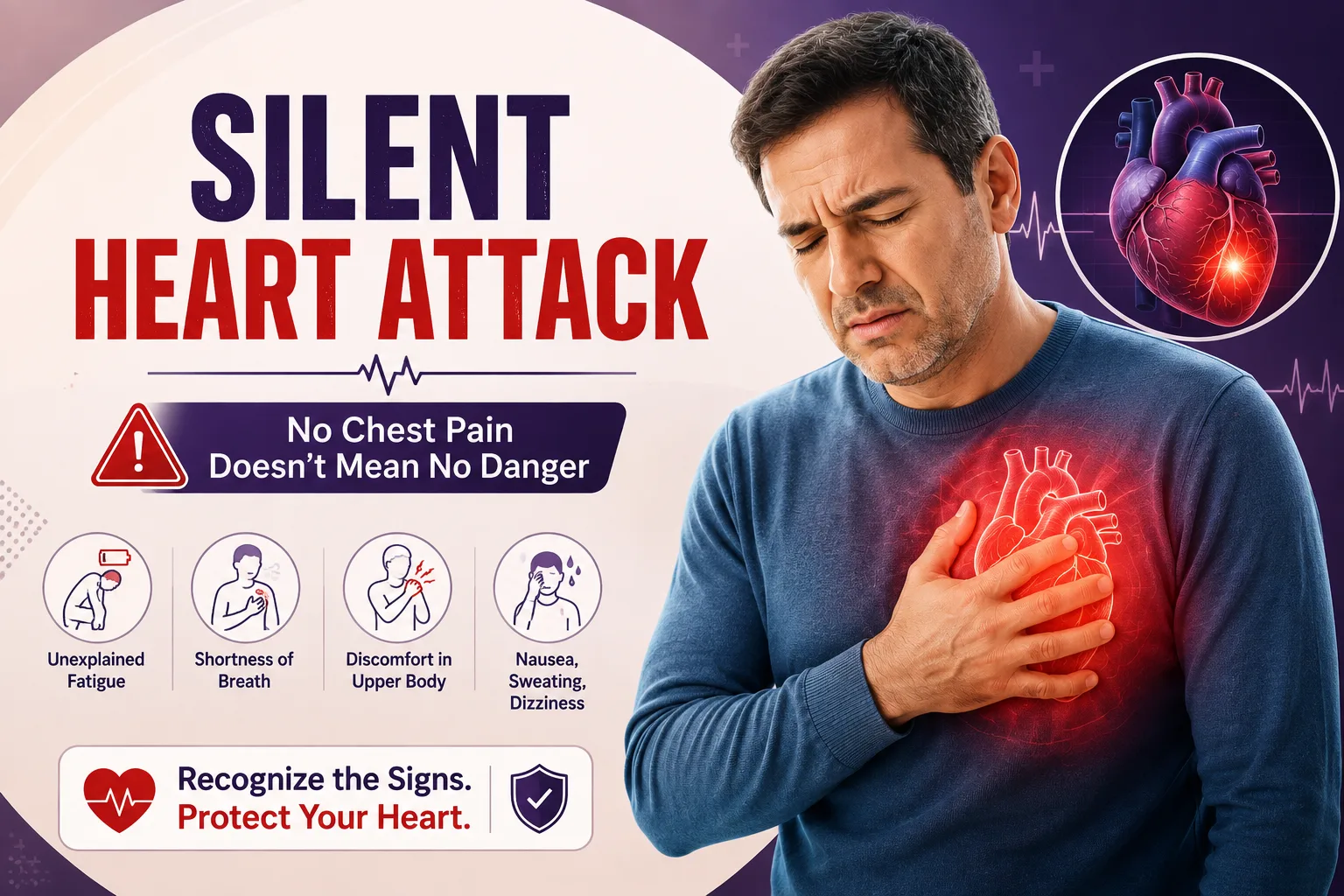
A heart attack is often imagined as sudden, severe chest pain. But some heart attacks happen with little or no chest pain at all. These are called silent heart attacks. They can still damage the heart muscle and may only be discovered later during a medical check-up, ECG or cardiac marker tests. Because the signs may be mild or unusual, many people mistake them for acidity, muscle strain, tiredness or a minor illness. That is why awareness matters especially if you already have risk factors such as diabetes, high blood pressure, high cholesterol, smoking, obesity or a family history of heart disease.
Symptoms:
➔ Silent heart attacks may not cause the classic crushing chest pain, but they can still produce warning signs. Common symptoms include unexplained fatigue, shortness of breath, mild discomfort in the chest, jaw, back, neck, shoulder, or arm, nausea, sweating, dizziness, indigestion or a flu-like feeling.
➔ Fatigue is especially important to notice when it is new, unusual or out of proportion to your normal activity. For example, if climbing stairs, walking short distances or doing routine tasks suddenly leaves you unusually exhausted, that should not be ignored, particularly if it comes with breathlessness, sweating, or discomfort in the upper body.
➔ Some people describe the pain as pressure, heaviness, fullness, tightness or a muscle-like ache rather than sharp chest pain.
➔ In women, older adults, and people with diabetes, the symptoms may be even more subtle or atypical.
Causes and Risk Factors:
A silent heart attack happens when blood flow to part of the heart becomes blocked, usually because of coronary artery disease. When the heart muscle does not get enough oxygen-rich blood, it can become injured or die, even if the person does not realize it right away. The risk factors are similar to those for any heart attack. These include high blood pressure, high cholesterol, diabetes, smoking, obesity, lack of exercise, older age, family history of heart disease, and prior heart attack.
Certain groups may be at higher risk of missing the warning signs. People with diabetes may have reduced pain awareness, while women are more likely to experience atypical symptoms such as fatigue, nausea and back or jaw discomfort rather than severe chest pain.
Prevention Tips:
You cannot prevent every heart attack, but you can reduce risk by protecting your heart every day. Regular physical activity, a heart-friendly diet, quitting tobacco, controlling blood pressure, managing cholesterol, and keeping blood sugar in target range are all important steps. It also helps to go for routine health check-ups, especially if you have diabetes, hypertension, obesity, or a family history of heart disease. Screening can detect silent risk factors early, before they lead to a major event.
Simple lifestyle habits can make a difference:
● Walk or exercise regularly, as advised by your doctor.
● Choose more vegetables, fruits, whole grains, legumes, and healthy fats.
● Reduce smoking and avoid secondhand smoke.
● Sleep adequately and manage stress.
● Do not ignore repeated indigestion-like discomfort or unexplained fatigue.
When to Consult a Doctor?
See a doctor soon if you have repeated unexplained fatigue, breathlessness with mild activity, unusual sweating, chest discomfort, or pain spreading to the jaw, arm, neck, or back. These symptoms may not always mean a heart attack, but they should be evaluated rather than dismissed. Seek urgent medical care if symptoms are sudden, severe, or happen together especially if you feel faint, very short of breath, nauseated, sweaty, or unwell in a way that feels different from usual. If you suspect a heart attack, do not wait for the pain to become “typical.”
Treatment Awareness:
★ Treatment depends on how soon the condition is recognized and how much heart damage has occurred. Doctors may use ECG, blood tests, echocardiography, stress testing, or other imaging to confirm the diagnosis and assess the heart. ★ After diagnosis, treatment may include medicines to reduce clotting risk, lower cholesterol, control blood pressure, and protect the heart muscle.
★ Some patients may need procedures to restore blood flow, such as angioplasty or bypass surgery, depending on the severity of the blockage.
★ Long-term care usually includes lifestyle changes and close follow-up to prevent another heart event.
★ Even if the first attack was “silent,” the heart may still have been injured, so ongoing treatment and monitoring are important.
GEWO Health Message:
GEWO Health Message: Good heart health begins with noticing small warnings early. If fatigue, breathlessness, or unusual discomfort feels new or unexplained, listen to your body and get checked in time.
Medical Disclaimer:
This article is for general education only and should not replace medical advice, diagnosis, or treatment from a qualified healthcare professional. If you think you may be having a heart attack or any emergency, seek immediate medical attention.