Disease Prevention
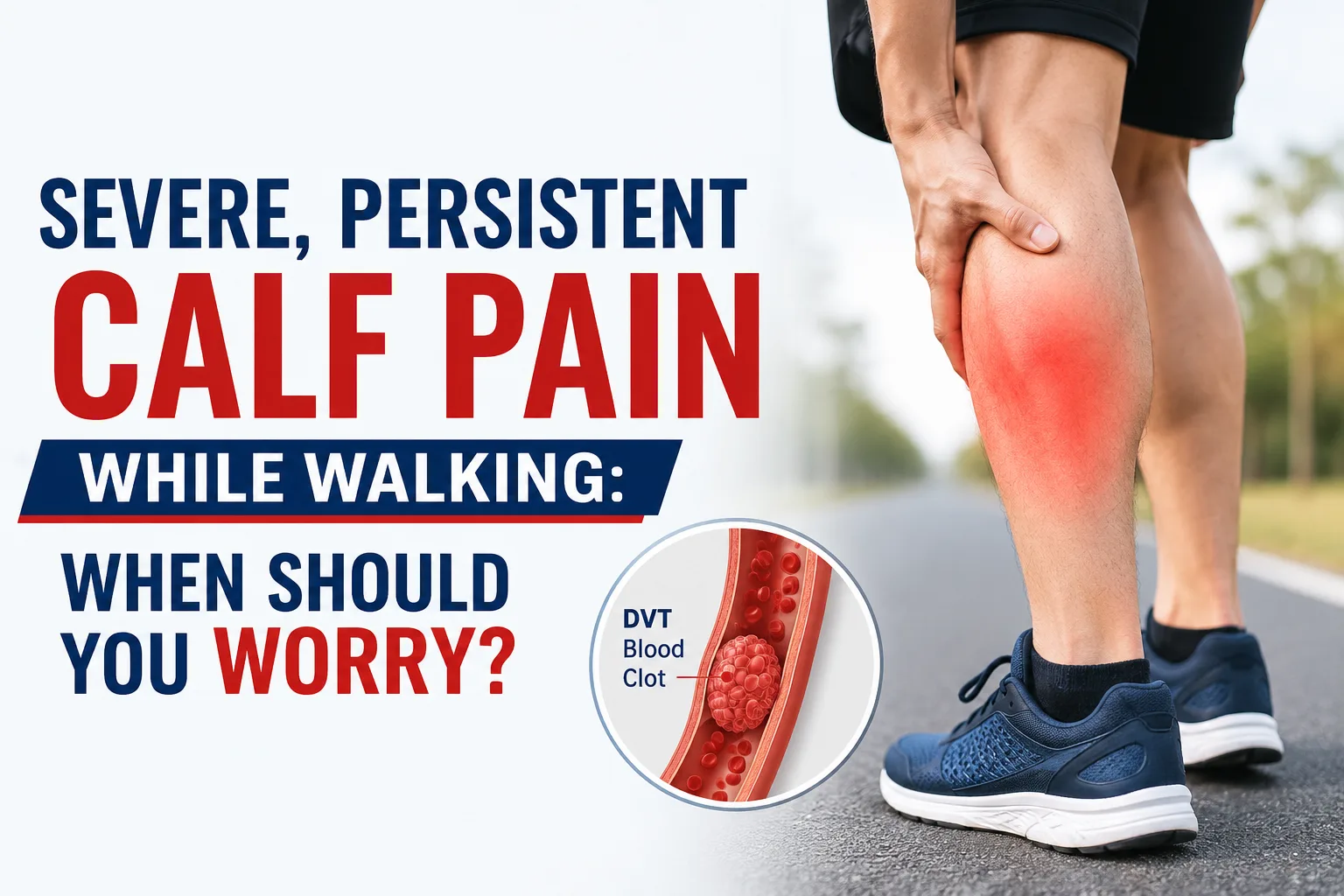
Severe, Persistent Calf Pain While Walking: When Should You Worry?
Severe or persistent calf pain while walking should not always be treated as a simple muscle strain. It can sometimes be linked to deep vein thrombosis (DVT), a blood clot that may lead to serious complications such as pulmonary embolism. Learn the warning signs, risk factors, prevention tips, and when urgent medical attention is needed. Early recognition and timely evaluation can help prevent dangerous complications.
Introduction:
Calf pain while walking is often attributed to muscle strain, cramps, or reduced blood flow from peripheral artery disease. However, deep vein thrombosis (DVT) is another potentially serious cause that should not be overlooked. DVT occurs when a blood clot forms in a deep vein, most commonly in the leg. DVT can sometimes develop with few or subtle symptoms, but if left untreated, part of the clot can break away and travel to the lungs, causing a potentially life-threatening pulmonary embolism (PE). Recognizing the warning signs of DVT and seeking timely medical evaluation can be crucial in preventing serious complications.
What Is DVT?
Deep vein thrombosis (DVT) is the formation of a blood clot (thrombus) in a deep vein, most commonly in the lower leg, thigh, or pelvis. The clot partially or fully blocks blood flow, leading to pain, swelling, and inflammation in the affected limb. DVT is part of a broader condition called venous thromboembolism (VTE), which also includes pulmonary embolism.
How to Identify DVT?
DVT doesn't always cause dramatic symptoms, but classic warning signs include:
● One-sided calf or leg swelling (often the most reliable sign).
● Pain or tenderness, especially when standing or walking; may feel like cramping or soreness.
● Warmth over the painful area.
● Red, blue, or darkened skin (may be harder to see on darker skin tones).
● Visible surface veins that look larger or more prominent.
● Heaviness or tightness in the leg.
Important: Up to half of DVT cases may have few or no symptoms. If you notice new, unexplained one-sided leg swelling with pain, especially after travel, surgery, or bed rest seek medical care promptly.
Causes and Risk Factors:
DVT develops when blood flow slows, vein walls are injured, or the blood becomes more prone to clotting. Common risk factors include:
● Immobility: Long flights or car rides (>4 hours), bed rest, hospitalization, paralysis, or stroke.
● Recent surgery or trauma, especially hip, knee, pelvis, or leg fractures.
● Cancer and some cancer treatments (e.g., chemotherapy).
● Pregnancy and up to 6 weeks postpartum.
● Hormone therapy: Oral contraceptives, hormone replacement therapy (HRT), or other estrogen-containing medications.
● Previous DVT or family history of blood clots; inherited clotting disorders (e.g., Factor V Leiden). ● Age over 40–60, obesity, smoking, varicose veins.
● Chronic conditions: Heart failure, inflammatory bowel disease, vasculitis, thrombophilia.
● Central venous catheters or long-term IV lines.
Note: Calf pain can also be due to peripheral artery disease (PAD), muscle strain, or nerve issues. Only a clinician can distinguish these safely.
Prevention Tips:
You can lower your DVT risk with simple, practical steps:
● Move regularly: On long trips, stand/walk every 1-2 hours; do ankle pumps and calf stretches while seated.
● Stay hydrated and avoid excessive alcohol on long journeys.
● Maintain a healthy weight and stay physically active daily.
● Quit smoking, nicotine affects circulation and clotting.
● After surgery or illness, follow your doctor's advice on early mobilization, compression stockings, or blood thinners if prescribed.
● Know your risks: If you have a personal/family history of clots, discuss prevention before travel, pregnancy, or starting hormonal therapy.
When to Consult a Doctor?
Seek immediate medical attention if you have:
● Sudden, unexplained one-sided leg swelling with pain, warmth, or redness
● Calf pain after recent surgery, hospitalization, long travel, or immobilization
● Signs of pulmonary embolism: sudden shortness of breath, chest pain (worse with deep breath), rapid heartbeat, coughing (possibly with blood), fainting
● Do not massage the leg or apply heat if DVT is suspected this could dislodge the clot.
Treatment Awareness:
If DVT is suspected, doctors typically order an ultrasound (Doppler) to confirm the clot. Treatment aims to prevent clot growth and PE and may include:
● Anticoagulants (blood thinners): Such as heparin, low-molecular-weight heparin, or direct oral anticoagulants (DOACs). Duration varies (often 3-6 months or longer depending on risk).
● Compression stockings: To reduce swelling and prevent post-thrombotic syndrome.
● Thrombolysis or procedures: In severe cases (e.g., large clots, limb threat), clot-busting drugs or catheter-based removal may be considered.
● Lifestyle measures: Early walking as tolerated, leg elevation, and adherence to medications.
● Never start or stop blood thinners without medical supervision.
GEWO Health Message:
At GEWO Health, we believe early awareness saves lives. Calf pain isn't always "just a strain." If you notice one-sided swelling, warmth, or persistent pain especially after travel, surgery, or bed rest, don't wait. Timely evaluation can prevent serious complications like pulmonary embolism. Talk to your doctor, know your risks, and move safely.
Medical Disclaimer:
This article is for general information and education only and does not replace professional medical advice, diagnosis, or treatment. Always seek the advice of your physician or qualified health provider with any questions about a medical condition. Never disregard professional medical advice or delay seeking care because of something you have read here. In case of a medical emergency, call your local emergency services immediately.