Other
Normal Aging and Memory Mechanisms: Understanding Memory Changes in Old Age
Forgetting a name occasionally or taking a little longer to recall information can be a normal part of aging. As we grow older, natural changes occur in the brain that may affect memory, attention, and processing speed. However, many abilities such as knowledge, vocabulary, and life skills remain strong. Regular exercise, mental stimulation, quality sleep, social engagement, and a healthy diet can help support brain health and maintain cognitive function as we age.
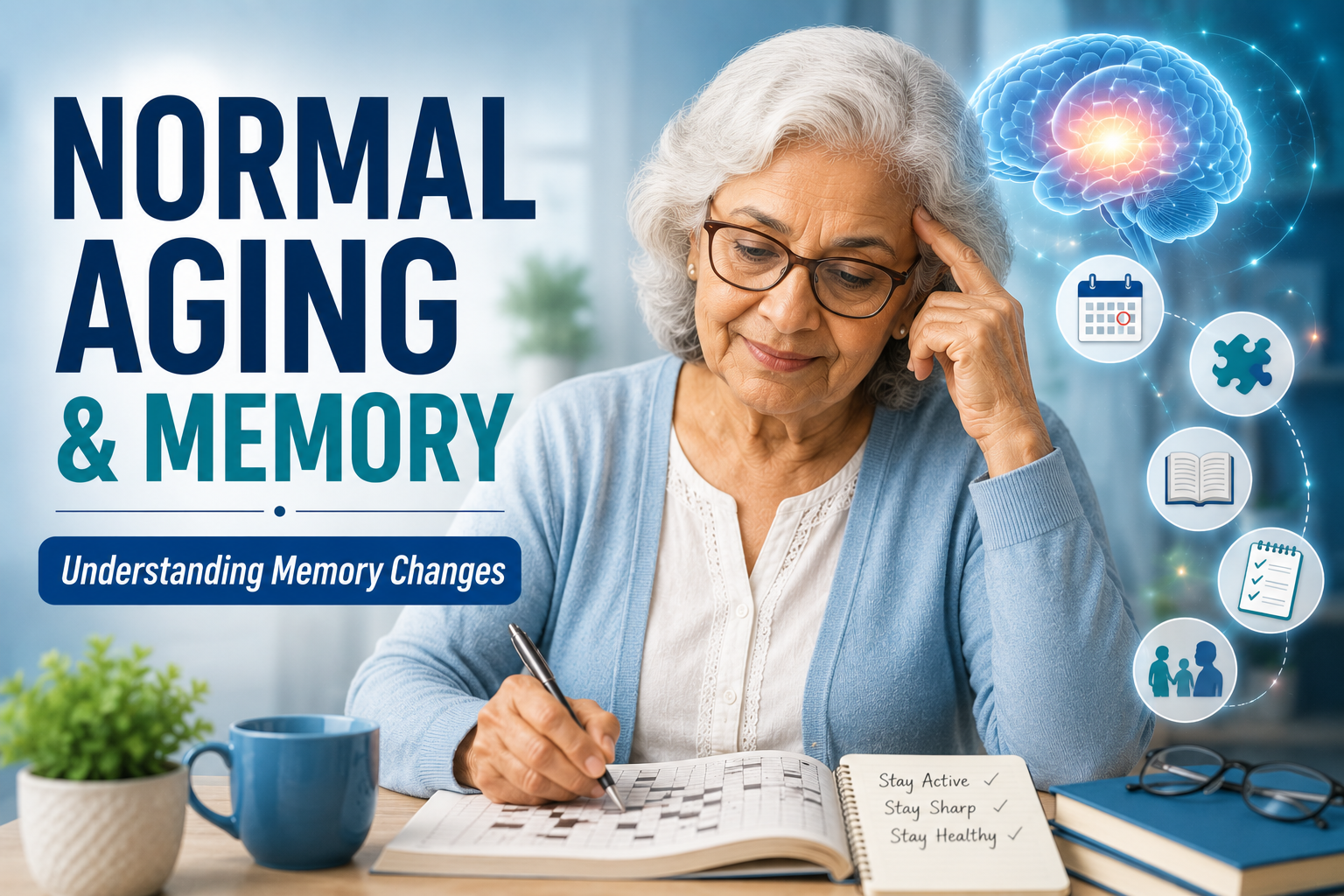
Aging is a universal journey and memory changes are among the most noticed parts of it.
But not every lapse in memory means disease!
Many are normal features of aging.
Understanding how memory changes, why they happen and what to expect can reduce worry and help people adopt practical habits that support brain health.
Normal Brain Changes- Anatomy as We Age:
Normal brain aging involves progressive, natural anatomical changes, including overall volume shrinkage (especially in the frontal lobes and hippocampus), deterioration of myelin and reduced synaptic connections. These changes physically manifest as slower cognitive processing, minor memory retrieval delays and slight reductions in executive function.
Brain Change -Gray matter loss
What Happens -Cortical thinning and reduced volume in frontal and temporal lobes.
Functional Impact-Slower processing speed, harder multitasking.
Brain Change -Hippocampal atrophy
What Happens -Mild shrinkage of the hippocampus (memory centre).
Functional Impact-Harder to form new episodic memories.
Brain Change -Ventricular enlargement
What Happens -Fluid-filled spaces in the brain grow larger.
Functional Impact-Normal aging changes, not necessarily disease.
Brain Change -White matter changes
What Happens -Reduced integrity of white matter tracts. Slower communication between brain regions.
Functional Impact-Sulcal widening Grooves on the brain surface become wider. Reflects overall brain volume loss.
Symptoms:
Memory is not a single ability but a set of processes.
Some memory types remain stable or even improve with age, while others decline.
● Stable or improved abilities: Semantic memory (facts, vocabulary) and procedural memory (skills
like riding a bike) usually stay intact and can even improve with experience.
● Commonly affected abilities: Episodic memory (recalling events, appointments), working
memory (holding information briefly to use), and the speed of encoding new information
typically decline with age.
● Retrieval vs encoding: Older adults often find it harder to encode and retrieve new, detailed
memories, especially when information is unfamiliar or presented quickly. Cues and context help
retrieval.
Causes/Risk Factors:
The biggest risk factor is simply aging itself.
Memory changes became more common in the 70s and 80s, though some people may notice mild
decline earlier.
Other factors that can worsen memory health include physical inactivity, smoking, heavy alcohol use, high blood pressure, diabetes, and poor cardiovascular health.
Practical strategies to support memory:
Many lifestyle and behavioral strategies can help preserve cognitive function and minimize the impact of normal aging on memory:
● Cognitive activity: Regular mental stimulation like learning new skills, reading, puzzles, or musical instruments, helps promote synaptic resilience and cognitive reserve.
● Physical exercise: Aerobic and resistance training improve cerebral blood flow, neurotrophic
support (e.g., BDNF), and metabolic health. Aim for at least 150 minutes of moderate activity per
week as tolerated.
● Sleep: Consolidation of memories occurs during sleep, particularly slow-wave and REM sleep.
Prioritize consistent sleep schedules and treat sleep disorders.
● Social engagement: Rich social interaction reduces stress and provides cognitive stimulation tied
to better memory outcomes.
● Diet and vascular health: A Mediterranean-style diet, control of hypertension, diabetes, and lipid
disorders, and avoiding smoking reduce vascular contributions to cognitive decline.
● Mindfulness and stress reduction: Chronic stress impairs hippocampal function. Mindfulness,
relaxation techniques, and counseling can mitigate this effect.
● Use of aids: External memory supports like calendars, alarms, lists, and structured routines—are
practical and often restore independence.
These steps do not guarantee prevention of dementia, but they can improve the chance of maintaining memory and thinking abilities for longer.
When to Consult a Doctor
If memory problems interfere with daily life or change rapidly, seek medical assessment.
A clinician will review history, medication effects, mood and sleep and may perform cognitive testing and blood work. Imaging or specialist referral is considered when indicated.
Treatment Awareness
There is no single medicine that reverses normal age-related memory change, but treatment awareness is still important.
Many memory concerns improve when contributing causes such as poor sleep, depression, medication
side effects, vitamin deficiency, stress or uncontrolled vascular risk factors are identified and managed.
GEWO Health Message
Growing older does not mean losing the mind.
Mild memory slowing can be a natural part of aging, but the brain still has the power to adapt, learn and stay active when supported by healthy habits.
At GEWO Health, the message is simple: protect the brain by caring for the whole body.
Regular exercise, meaningful social connection, good nutrition, mental activity and early medical
attention for concerning symptoms can make healthy brain aging more achievable.
Medical Disclaimer
This article is for educational purposes only and should not be used as a substitute for professional
medical advice, diagnosis or treatment.
Any persistent, worsening or unusual memory problem should be discussed with a qualified doctor or neurologist.
These steps do not guarantee prevention of dementia, but they can improve the chance of
maintaining memory and thinking abilities for longer.