Mental Health
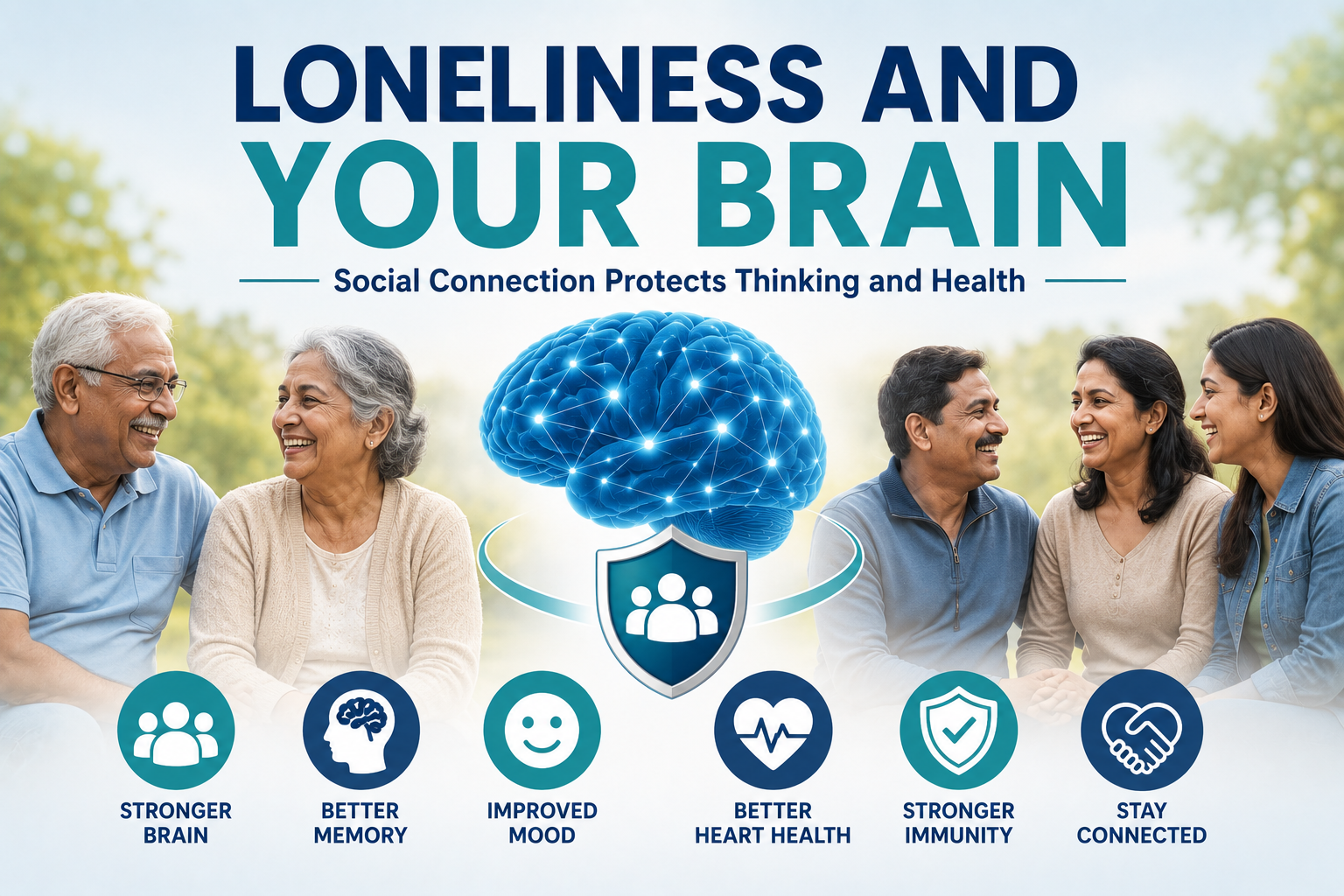
Loneliness and Your Brain: How Social Connection Protects Thinking and Health
Loneliness affects more than emotions—it can also impact memory, mood, and overall brain health. Staying socially connected helps strengthen cognitive function, reduce stress, and support healthy aging. Simple habits like talking with loved ones, joining community activities, and seeking support when needed can make a meaningful difference. Prioritizing social connection is an important step toward protecting both your mental well-being and long-term brain health.
Loneliness and Your Brain: How Social Connection Protects Thinking and Health
Loneliness is more than just a sad feeling.......it’s a health issue that affects the brain, body and daily
life. Interestingly enough research shows that regular social engagement strengthens cognitive
resilience, meaning people who stay socially connected often keep thinking skills, memory and mood
healthier as they age. This article explains how loneliness can affect your health, how to recognise it,
steps you can take to protect yourself, and when to seek medical help.
Symptoms:
Loneliness can appear in many ways.
Common signs include:
● Persistent feelings of sadness, emptiness or isolation.
● Loss of interest in activities you once enjoyed.
● Increased worry, irritability or mood swings.
● Difficulty concentrating, forgetfulness or slowed thinking.
● Changes in sleep (trouble falling asleep, waking often, or sleeping too much).
● Appetite or weight changes.
● Avoiding social contact or withdrawing from friends and family.
● Physical complaints such as headaches, unexplained aches, or low energy.
Note: Feeling lonely sometimes is normal, but the problem is ongoing or worsening loneliness that affects
daily function.
Causes and Risk Factors:
Loneliness can result from life changes, health conditions or social barriers.
Common causes and risk factors include:
● Life transitions: moving cities, retirement, losing a spouse, or changing jobs.
● Living situation: living alone, especially after major life changes or in older age.
● Chronic illness or disability: physical limitations can reduce opportunities for social contact.
● Mental health conditions: depression and anxiety often increase withdrawal and loneliness.
● Sensory loss: hearing or vision problems make conversations harder.
● Mobility issues or lack of transport: difficulty leaving home limits social activities.
● Cultural or language barriers: newcomers or migrants may feel isolated.
● Poor social skills or low confidence: difficulty initiating or maintaining relationships.
● Stigma and discrimination: experiences that push people away from social groups.
● Digital gaps: lack of access to or comfort with online communication can limit connections,
especially when in-person contact is reduced.
Why Loneliness Matters for Health:
Loneliness raises the risk of several health problems:
● Mental health: increases risk of depression and anxiety.
● Cognitive decline: chronic loneliness is linked to faster memory loss and higher risk of dementia.
● Cardiovascular health: higher rates of high blood pressure, heart disease, and stroke.
● Immune function: chronic social isolation can boost inflammation, lowering resistance to
infections.
● Sleep and appetite: disrupted sleep and poor diet amplify health risks.
● Mortality: prolonged loneliness has been associated with higher overall risk of early death.
Prevention Tips:
Small, consistent steps can build social connection and cognitive resilience.
Try these practical tips:
● Make a daily contact goal: call, message, or meet one person each day, even briefly.
● Reconnect intentionally: reach out to an old friend, neighbour, or family member.
● Join groups with shared interests: hobby classes, book clubs, spiritual groups, or community centres.
● Volunteer: helping others builds purpose and provides regular social contact.
● Use technology: learn simple ways to video-call or join online communities if in-person meetups are hard.
● Start small: aim for short social interactions (10-15 minutes) and increase as you feel comfortable.
● Combine social and physical activity: walking groups or exercise classes support both mood and brain health.
● Strengthen existing ties: schedule regular catch-ups, share meals, and celebrate small events together.
● Build skills: practice conversation starters and active listening; consider community workshops on communication.
● Create routines: weekly classes, religious services, or communal meals add predictable social structure.
● Look after hearing and vision: regular check-ups and using aids (hearing aids, glasses) make communication easier.
● Manage technology use: reduce isolating screen time and use social platforms deliberately to connect rather than compare.
When to Consult a Doctor:
See a healthcare professional if:
● Loneliness is persistent and affects daily functioning (work, relationships, self-care).
● You notice worsening memory, confusion, or thinking problems.
● Symptoms of depression or anxiety appear (persistent low mood, loss of interest, severe worry).
● You have changes in sleep or appetite that last more than two weeks.
● You have frequent unexplained physical symptoms (headaches, digestive issues, low energy).
● You experience thoughts of self-harm or hopelessness, seek immediate help or emergency care.
Treatment Awareness:
Treatment depends on causes and severity.
Options include:
● Psychotherapy: Cognitive behavioural therapy (CBT) and other counselling approaches teach
skills for managing loneliness, reducing negative thinking, and improving social behaviours.
● Social prescribing: clinicians may refer you to community resources, support groups, or activities
rather than medications.
● Medication: antidepressants or anxiolytics may be prescribed when loneliness coexists with
clinical depression or anxiety.
● Group therapy: structured groups provide social support and skill-building in a safe setting.
● Rehabilitation and assistive devices: addressing hearing loss, mobility limits, or speech problems
can improve social participation.
● Digital interventions: guided online programmes and supervised social platforms can help people
who are housebound.
● Collaborative care: integrated approaches that combine medical, social, and community
supports tend to work best.
If you are an older adult, your doctor may screen for cognitive impairment and tailor interventions to maintain independence and connections.
GEWO Health Message:
At GEWO Health, we believe social connection is a vital part of overall health.
Simple, regular social interactions strengthen the brain and support emotional wellbeing. Reach out, stay curious about building new ties, and remember small steps today can protect thinking and mood tomorrow. Community, purpose, and consistent contact are powerful medicines.
Medical Disclaimer:
This article provides general information about health and is not a substitute for professional medical advice, diagnosis or treatment. Always consult a qualified healthcare provider with any questions about a medical condition. If you are in immediate danger or have thoughts of harming yourself, seek emergency help or contact local crisis services right away.