Other
Alzheimer’s Disease
Alzheimer’s disease is the most common cause of dementia and affects memory, thinking, behaviour, and daily functioning. It occurs when abnormal protein deposits gradually damage brain cells, leading to progressive cognitive decline. Early symptoms may include forgetfulness, confusion, and difficulty completing familiar tasks.
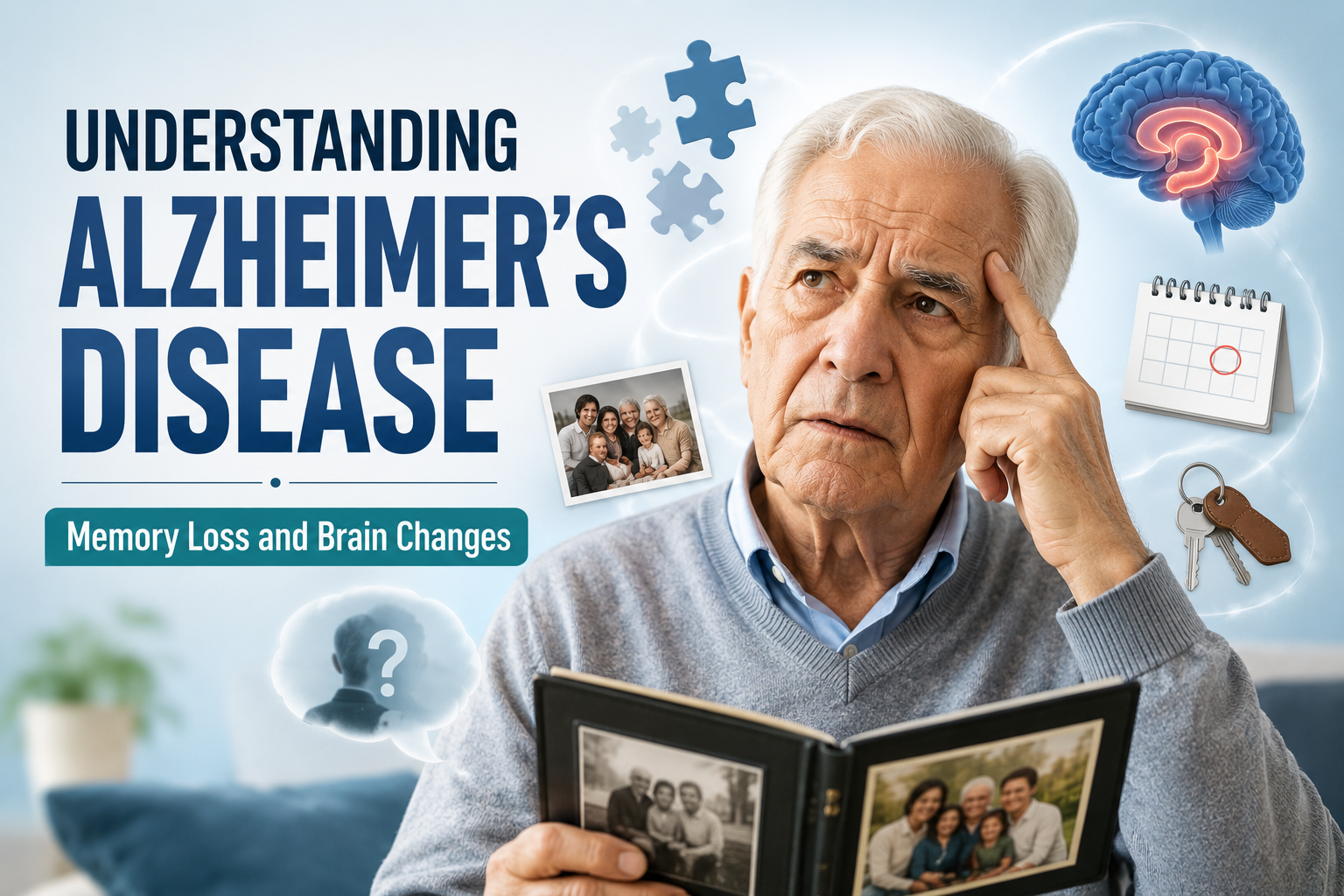
Alzheimer’s Disease: Understanding Memory Loss and Brain Changes
Alzheimer’s disease is the most common cause of dementia and mainly affects memory, thinking,
behavior and daily functioning. It is a progressive brain disorder, meaning symptoms slowly worsen over time. While mild forgetfulness can occur with normal aging, Alzheimer’s disease causes more serious memory problems that interfere with everyday life and independence.
Therefore , early awareness of symptoms and timely medical support can help improve quality of life for both patients and caregivers.
What Happens in Alzheimer’s Disease?
In Alzheimer’s disease, abnormal protein deposits gradually damage and destroy brain cells.
Two major proteins are involved:
● Amyloid-beta plaques: Sticky protein clumps that collect between brain cells.
● Tau tangles: Twisted fibers that build up inside brain cells and disrupt normal communication.
Over time, these changes lead to:
● Loss of brain cells.
● Reduced communication between neurons.
● Brain inflammation.
● Shrinkage of important brain areas involved in memory and thinking.
The hippocampus, a part of the brain responsible for forming memories, is one of the earliest and most affected regions.
Brain Changes Seen in Alzheimer’s Disease:
1. Brain scans such as MRI may show characteristic structural changes in Alzheimer’s disease.
2. Brain Change What Happens Functional Effect Hippocampal atrophy Shrinkage of the memory center. Difficulty forming new memories.
3. Cortical thinning Loss of brain tissue in outer brain regions.
4. Problems with thinking and reasoning.
5. Ventricular enlargement Fluid-filled spaces in the brain enlarge.
6. Reflects overall brain volume loss.
7. Loss of neuronal connections
8. Brain cells communicate less effectively.
9. Slower thinking and confusion.
10. These brain changes become more severe as the disease progresses.
Symptoms of Alzheimer’s Disease:
Symptoms usually begin gradually and worsen over time.
Early Symptoms:
● Forgetting recent conversations or events.
● Repeating questions frequently.
● Misplacing objects often.
● Difficulty finding words during conversations.
● Trouble remembering appointments.
● Getting confused in familiar places.
Moderate Symptoms
As the disease progresses, individuals may experience:
● Increased confusion.
● Difficulty managing finances or medications.
● Mood and personality changes.
● Problems recognizing people.
● Difficulty performing familiar tasks.
● Changes in judgment and decision-making.
Advanced Symptoms
In later stages, Alzheimer’s disease may cause:
● Severe memory loss.
● Loss of communication abilities.
● Difficulty swallowing or walking.
● Complete dependence on caregivers.
● Increased vulnerability to infections and physical decline.
Risk Factors: Several factors increase the risk of Alzheimer’s disease.
Common risk factors are:
● Increasing by age.
● Family history.
● Genetic factors.
● High blood pressure.
● Diabetes.
● Smoking.
● Obesity.
● Physical inactivity.
● Poor cardiovascular health.
Although age is the strongest risk factor, Alzheimer’s disease is not considered a normal part of aging.
Diagnosis:
Doctors diagnose Alzheimer’s disease using:
● Medical history.
● Memory and cognitive testing.
● Physical and neurological examination.
● Blood tests to rule out other conditions.
● Brain imaging such as MRI or CT scans.
In some cases, specialized biomarker testing may also be used.
Early diagnosis helps patients and families plan treatment and support more effectively.
Treatment and Management
There is currently no complete cure for Alzheimer’s disease, but treatment may help manage symptoms and improve quality of life.
Treatment approaches include:
● Medications that support memory and cognition temporarily.
● Cognitive stimulation activities.
● Physical exercise.
● Structured daily routines.
● Emotional and caregiver support.
● Management of sleep and behavioral symptoms.
● Lifestyle support and safe home environments are also important parts of care.
Supporting Brain Health
Healthy lifestyle habits may help support overall brain function and possibly reduce risk.
Helpful habits include:
● Regular physical activity.
● Mental stimulation and lifelong learning.
● Healthy sleep.
● Social interaction.
● Balanced nutrition.
● Stress management.
● Controlling blood pressure, cholesterol and diabetes.
When to Seek Medical Help
Consult a doctor if memory problems:
● Interfere with daily life.
● Become progressively worse.
● Affect communication or judgment.
● Cause confusion or behavioral changes.
● Are noticed by family members.
Early medical attention is important because some causes of memory problems may be treatable.
GEWO Health Message
Alzheimer’s disease affects not only memory but also emotions, relationships and independence.
Recognizing symptoms early and seeking timely support can make a meaningful difference in care and quality of life.
At GEWO Health, we believe that awareness, compassion, healthy living and early intervention are
essential in supporting individuals living with Alzheimer’s disease and their families.
Medical Disclaimer
This article is for educational purposes only and should not replace professional medical advice,
diagnosis, or treatment.
Anyone experiencing persistent memory loss, confusion or changes in thinking or behavior should
consult a qualified doctor or neurologist for proper evaluation.