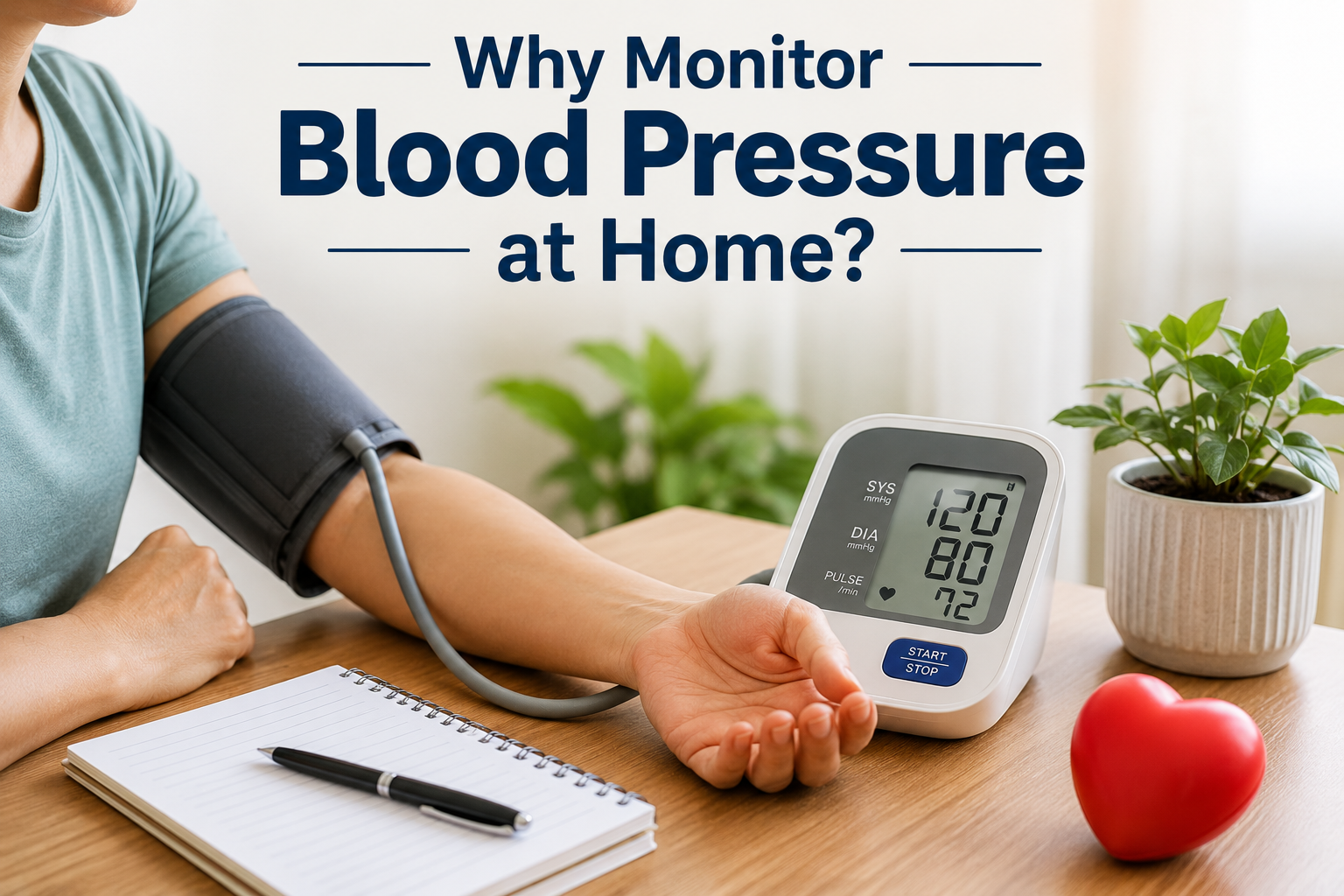
The American Heart Association has recommended home monitoring for all those people with documented high blood pressure to know the efficacy of treatment and to govern any Change in medications .
However home monitoring does not replace regular doctor visits .
Never take medications on your own without doctor consultations .
Who should monitor blood pressure at home ?
Anyone diagnosed with high blood pressure
People starting or changing treatment
High risk groups ,who need close monitoring e.g diabetics , heart disease patients, dyslipidemic etc .
Masked hypertension
Individuals who experience white coat hypertension
Choosing the Right Device
An automatic, upper-arm blood pressure monitor is generally recommended. Wrist and finger devices are less reliable and more sensitive to body position.
When selecting a device:
Ensure it is clinically validated
Choose the correct cuff size for your arm
It is advisable to bring your monitor to your healthcare provider at least once a year to verify its accuracy against office equipment
Steps to measure blood pressure at home
Firstly discuss with your health care professional about how to use monitor . It is important to make sure that the monitor is accurate and that you have correct cuff size and fit.
When preparing to take your blood pressure:
Don’t smoke, drink caffeinated beverages or exercise within 30 minutes before taking your blood pressure.
Empty your bladder.
Don't take the measurement over clothes. Remove the clothing over the arm that will be used to measure blood pressure.
You can use either arm. Usually there is not a big difference between readings on them.
Be still. Allow at least five minutes of quiet rest before measurements. Don’t talk or use the phone.
Sit correctly. Support your arm on a flat surface and make sure it is at heart level (prop a pillow underneath your arm if needed). The middle of the cuff should be placed on the upper arm at heart level. The bottom of the cuff should be placed directly above the bend of the elbow on your bare skin, not over clothing. Check your monitor's instructions for an illustration or have your health care professional show you how.
Measure at the same time every day. Take the readings at the same time each day.
Talk with your health care professional about how often to take your blood pressure.
Take multiple readings and record the results. Each time you measure, take two readings one minute apart
Record the results using a tracker .
How often should one check his/ her blood pressure :
If newly diagnosed ,measure twice daily - once in morning before taking medicine and once in evening for seven days . Discard first days reading and calculate average of remaining days .
Those with stable blood pressure , check few days per month.
Always follow your healthcare provider’s advice regarding frequency.
Understanding Your Numbers
For home measurements, a normal blood pressure is generally considered below 135/85 mmHg. Consistent readings at or above this level may indicate hypertension. However, targets may vary depending on age, medical history, and individual risk factors.
Seek immediate medical care if your blood pressure reaches 180/120 mmHg or higher, especially if accompanied by symptoms such as chest pain, shortness of breath, weakness, visual changes, or severe headache.
Tips for Accurate Tracking
Measure at the same times daily
Use the same arm each time
Bring your monitor to clinic yearly to compare with office readings
Keep a written or digital log