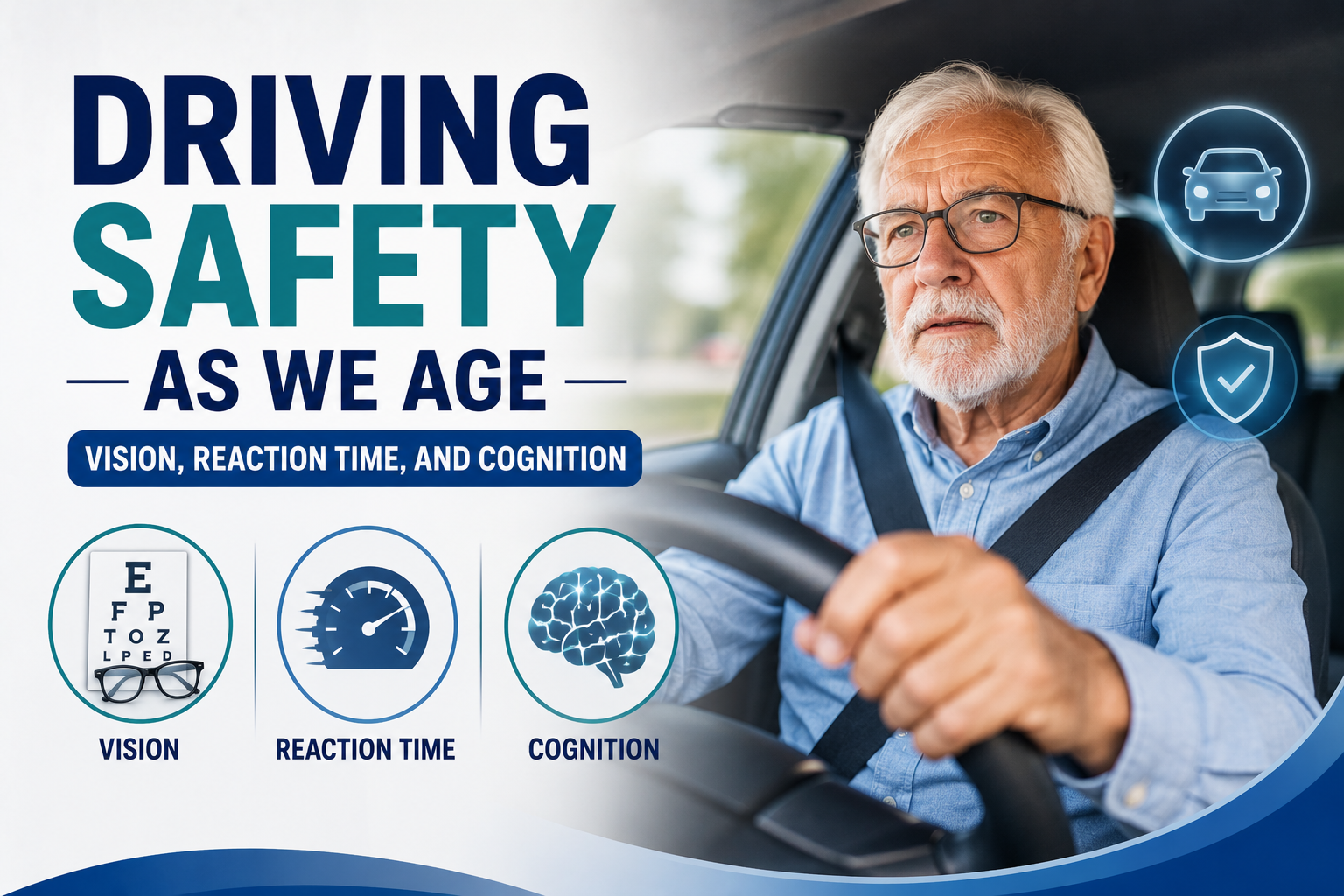
Driving Safety as We Age: Vision, Reaction Time, and Cognition
Driving is a key part of independence and daily life for many older adults. As we age, changes in vision, reaction time and thinking skills can affect driving safety. Understanding these changes such as, what’s normal, what’s risky, and what can be done to help older drivers, families and caregivers make safer choices while preserving independence are very important.
Signs indicating that driving may be unsafe are:
● Difficulty reading road signs, traffic lights, or license plates until very close. ● Trouble seeing at night or with glare from oncoming headlights.
● Slower responses to sudden events (braking later or taking longer to steer away).
● Getting lost on familiar routes or taking longer to plan trips.
● Near-misses, minor collisions, or more frequent scrapes and dents.
● Trouble judging distances or speeds of other vehicles.
● Increased anxiety, irritability, or avoidance of driving in challenging situations (night, highways, heavy traffic).
● Fatigue, dizziness, or medication side effects that affect alertness.
Causes and Risk Factors:
Several age-related and health factors can reduce driving ability, common contributors include:
● Vision changes: Reduced visual acuity, contrast sensitivity, peripheral (side) vision loss, cataracts, glaucoma, or age-related macular degeneration.
● Slower reaction time: Delays in processing visual information and moving hands/feet.
● Cognitive changes: Declines in attention, planning, multitasking, spatial awareness, and memory (including early dementia).
● Medications: Sedatives, some pain medicines, certain antihistamines, antidepressants, and other drugs can impair alertness, coordination, or judgment.
● Physical limitations: Reduced neck mobility, arthritis, or weakness that hinder steering, checking blind spots, or controlling pedals.
● Sleep problems and fatigue: Poor sleep or sleep disorders (e.g., sleep apnea) worsen attention and reaction time.
● Alcohol and substance use: Even small amounts amplify age-related impairments.
● Medical conditions: Stroke, Parkinson’s disease, heart disease, uncontrolled diabetes (affecting vision or sensation), and recent surgery or hospitalisation.
Prevention Tips:
★ Vision and sensory:
● Have regular eye exams at least annually; follow through with glasses, bifocals, or low-vision aids as prescribed.
● Update glasses for driving: anti-reflective coatings reduce glare; consider single-vision distance lenses for driving if bifocals cause problems with near-to-far shifts.
● Keep headlights, windshield, and mirrors clean. Replace bulbs promptly.
● Improve home and car lighting; use sun visors to reduce glare.
★ Cognition and reaction time:
● Keep mentally active: reading, puzzles, learning new skills, and social engagement help preserve cognition.
● Practice divided attention tasks gradually (e.g., simple multitasking exercises at home) but avoid distracted driving.
● Stay physically active; regular aerobic and balance exercise improve reaction time and coordination.
★ Medication and health management:
● Review medications with a doctor or pharmacist; ask about side effects that affect driving.
● Manage chronic conditions (blood pressure, diabetes, sleep apnea) with your healthcare team.
● Avoid alcohol before driving and limit medications that cause drowsiness.
★ Driving habits and environment:
● Drive during daylight and in good weather whenever possible.
● Avoid busy highways, complex intersections, and night driving if you notice problems.
● Use GPS with clear directions to reduce route-planning stress.
● Consider vehicle aids: larger mirrors, blind-spot monitors, automatic emergency braking, adaptive cruise control, and parking sensors.
● Take refresher driving lessons or assessments from certified driving instructors who work with older adults.
When to Consult a Doctor?
See a healthcare professional promptly if you or a loved one notice:
● Sudden or rapidly worsening vision changes (blurry vision, double vision, sudden loss of visual field).
● New episodes of confusion, disorientation, memory loss affecting daily tasks, or problems understanding directions.
● Fainting, seizures, falls, or significant balance problems.
● Sudden weakness, numbness, speech changes, or other stroke-like symptoms.
● Excessive daytime sleepiness or suspected sleep apnea.
● New medications or changes in dose that make you sleepy, dizzy, or mentally slowed.
Your primary care doctor, ophthalmologist/optometrist, neurologist, or geriatrician can evaluate these issues. They may recommend vision testing, cognitive screening, medication review, or driving assessments.
Treatment Awareness:
Treatments and supports depend on the underlying cause:
➔ Corrective eye care: Cataract surgery, updated glasses, or treatment for glaucoma or macular disease can markedly improve vision.
➔ Medication adjustments: Switching drugs or altering doses can reduce drowsiness and improve alertness.
➔ Rehabilitation: Occupational therapy driving rehabilitation specialists offer on-road and off-road assessments and training, and suggest vehicle modifications.
➔ Physical therapy and exercise: Improve strength, flexibility, and reaction times.
➔ Cognitive interventions: Memory clinics or neurocognitive therapies can help manage mild cognitive impairment; early diagnosis of dementia allows planning and tailored support.
➔ Assistive technology: ADAS (advanced driver-assistance systems) and in-vehicle aids can reduce risk but are not substitutes for safe driving judgment. ➔ Driving cessation planning: If driving becomes unsafe, structured transition plans, public transport training, ride-sharing apps, community transport options, and family support can maintain mobility.
GEWO Health Message:
Your safety and independence matter. Regular check-ups for vision, medication review, and honest conversations with family and clinicians are key. Small changes like updating glasses, adjusting driving habits, treating sleep problems, or using vehicle safety technology, can keep you driving safely longer. If driving becomes risky, plan early for alternatives so you can stay active and connected without compromising safety.
Medical Disclaimer:
This article provides general information and is not a substitute for professional medical advice, diagnosis or treatment.