Medical Research
Does Rice Really Cause Weight Gain?
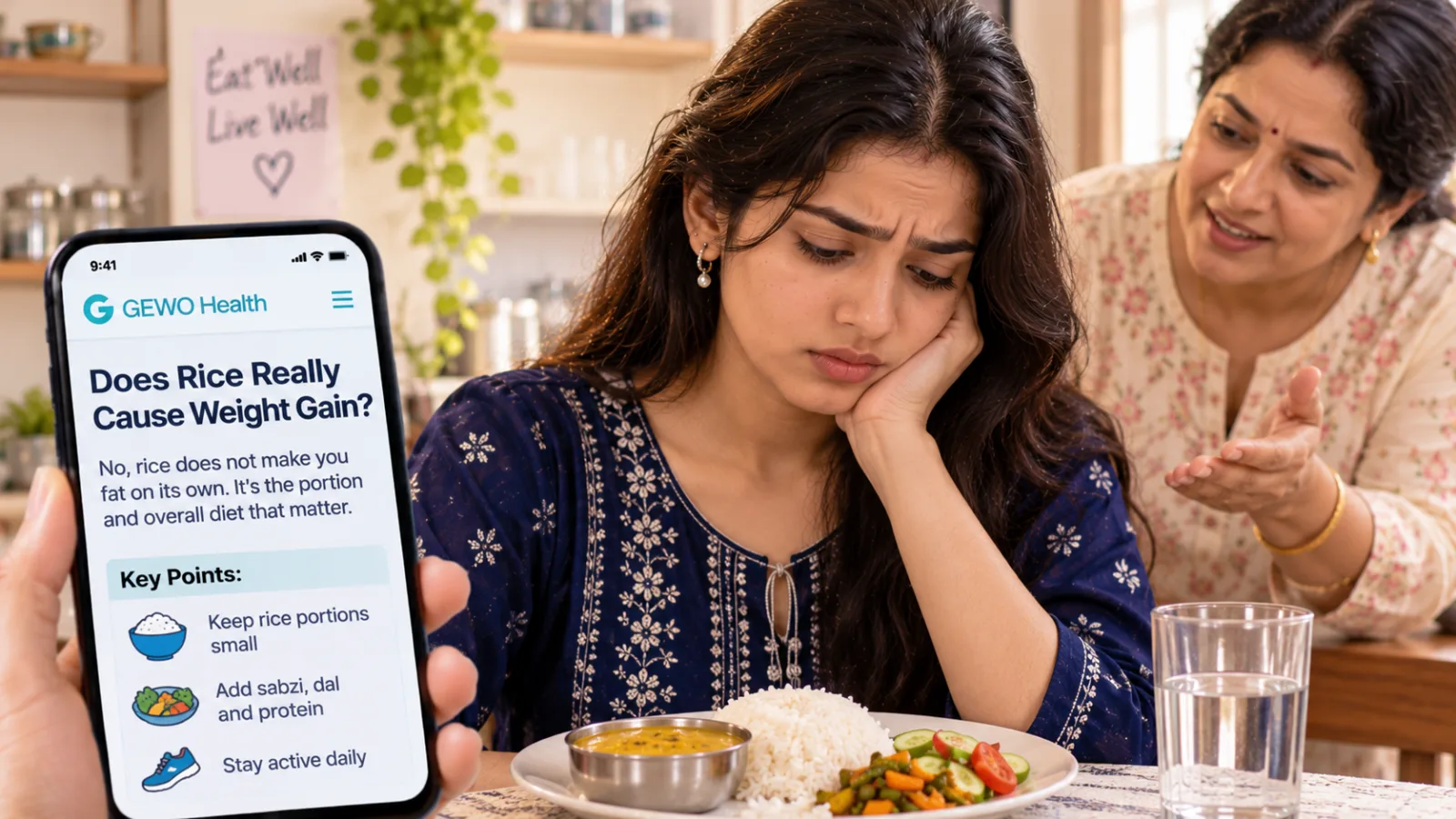
Rice does not make you fat on its own. Weight depends on how much you eat and how much you move. Keep rice portions small and add dal, sabzi and protein. See a doctor if your waist keeps growing or you notice signs of diabetes.
What: Rice is a starchy grain. It gives energy, like roti does.
How common: About 1 in 4 Indian adults is overweight or obese. Most Indian calories come from grains and sugar.
See a doctor: Your waist keeps growing, or you always feel thirsty and tired.
What helps: Less rice, half a plate of sabzi, more dal, daily walks.
GET WELL: what rice really does to your weight
1. Is rice the villain, or is it the portion?
It is mostly the portion. No single food makes you gain weight. Weight goes up when you eat more energy than you use.
Rice is a starchy food. Gram for gram, starch has less than half the calories of fat. The trouble starts with heaped plates, second helpings and ghee on top.
2. How much does India rely on rice and grains?
A lot. A large ICMR study looked at what Indians eat across the country. About 62 out of every 100 calories came from carbohydrates. Most of that came from refined grains, like polished white rice, and added sugar.
The ICMR diet guide sets a limit. Grains should give no more than 45 of every 100 calories. So for many of us, the plate is simply too full of grain.
Weight is rising with it. About 24 in 100 women and 23 in 100 men are overweight. More than half of women carry extra fat around the belly.
3. Why does a rice meal sometimes add weight?
A few everyday things tip the balance.
Big portions: Rice is soft and quick to eat. It is easy to finish two or three servings without noticing.
Thin partners: Rice with only a little curry has little protein or fibre. The plate becomes mostly grain.
Polished grain: In a Chennai study, white rice raised blood sugar more than brown rice. Brown rice kept insulin lower too.
Less movement: Desk jobs, long commutes and screens mean we burn less energy.
So it is not your love of rice that is the problem. It is how the plate is built.
4. What do Indian families often believe?
What people say | What is true |
|---|---|
"Rice makes you fat." | No single food causes weight gain. Total amount and plate partners matter more. |
"Never eat rice at night." | Dietitians say what and how much you eat matters more than the clock. |
"Quit rice to lose belly fat." | You do not need to quit. Watch the portion instead. |
"Just switch to roti or millets." | In the ICMR study, that swap alone did not lower risk. Swapping some grain for protein did. |
5. Is rice a worry for diabetes?
It can be, if you eat a lot of it. A study across 21 countries looked at white rice. It included India and Pakistan. Three or more cups of cooked rice daily was linked to higher diabetes risk. The link was strongest in South Asia.
This does not mean one bowl is harmful. It means large daily amounts add up. If you have diabetes, ask your doctor or dietitian how much rice suits you.
6. When should we see a doctor?
Watch at home if: You want to lose a little weight. You feel well, and you are ready to change your plate and walk more.
Book a doctor if: You are very thirsty, pee more, or feel tired a lot. Book also for weight loss without trying, blurred vision, or cuts that heal slowly. South Asians over 25 with extra weight should ask about a sugar test too. Book a doctor
Go now if: Someone with high sugar is vomiting, has tummy pain or breathes fast. Go now for strong sleepiness, confusion or sweet, fruity breath. Call your local emergency number or go to the nearest hospital now. Find your emergency number
The check-up: The doctor checks your weight, waist and blood pressure. They may ask for a simple blood sugar test. They will ask what a normal day of meals look like. Write down your meals for three days and bring the list.
LIVE WELL: enjoy rice without the extra weight
7. How can we keep rice and still stay healthy?
You can keep rice on the plate. Build the plate around it.
Half the plate: Fill half your plate with sabzi, salad and fruit. The ICMR guide suggests this for every day.
More protein: Add dal, rajma, chana, curd, egg or fish. In the ICMR study, swapping some grain for protein meant lower diabetes risk.
Less polished grain: Try brown or less polished rice for some meals. At least half your grains should be whole grains.
Daily movement: The WHO advises regular activity at every age. A walk after dinner is a good start.
Rice habit | What we know |
|---|---|
Brown or less polished rice | Gentler rise in blood sugar than white rice. (Some) |
Rice mixed with beans or dal | In a Chennai study, it kept sugar lower than white rice. (Some) |
Cooled, then reheated rice | One small study found a smaller sugar rise. (Some) |
Draining the rice water (maad) | A common home habit. Weight effect not tested. (Traditional) |
A safety tip: if you keep cooked rice, cool it within an hour. Put it in the fridge and eat it within a day. Reheat it until steaming hot, and only once.
8. What can we start this week?
Start with any three:
Use a smaller bowl. Serve rice once, and skip the second scoop.
Fill half the plate first. Put sabzi and salad on before the rice.
Add one protein source. Add dal, chana, curd, egg or fish to each meal.
Mix in brown rice. Try it for a few meals a week.
Walk after dinner. A short family walk counts.
Online doctor in India: eSanjeevani is the Government of India's online OPD. You can see a doctor from home at esanjeevani.mohfw.gov.in.
The good news: You do not have to give up rice to stay healthy. Families across India and Pakistan eat it every day. Eat a smaller portion, add sabzi and dal, and walk daily. Then rice can stay on your plate.
Need help? Book a doctor · Book a wellness provider
Get Well. Live Well.
Medical disclaimer: This article is for general information only. It is not a diagnosis or a substitute for advice from your own doctor. Always speak to a qualified doctor about your health or your child's health. Do not stop or start any treatment based on this article.
In an emergency, do not wait for an online consultation. Call your local emergency number or go to the nearest hospital. Find emergency numbers for every country, by continent.